
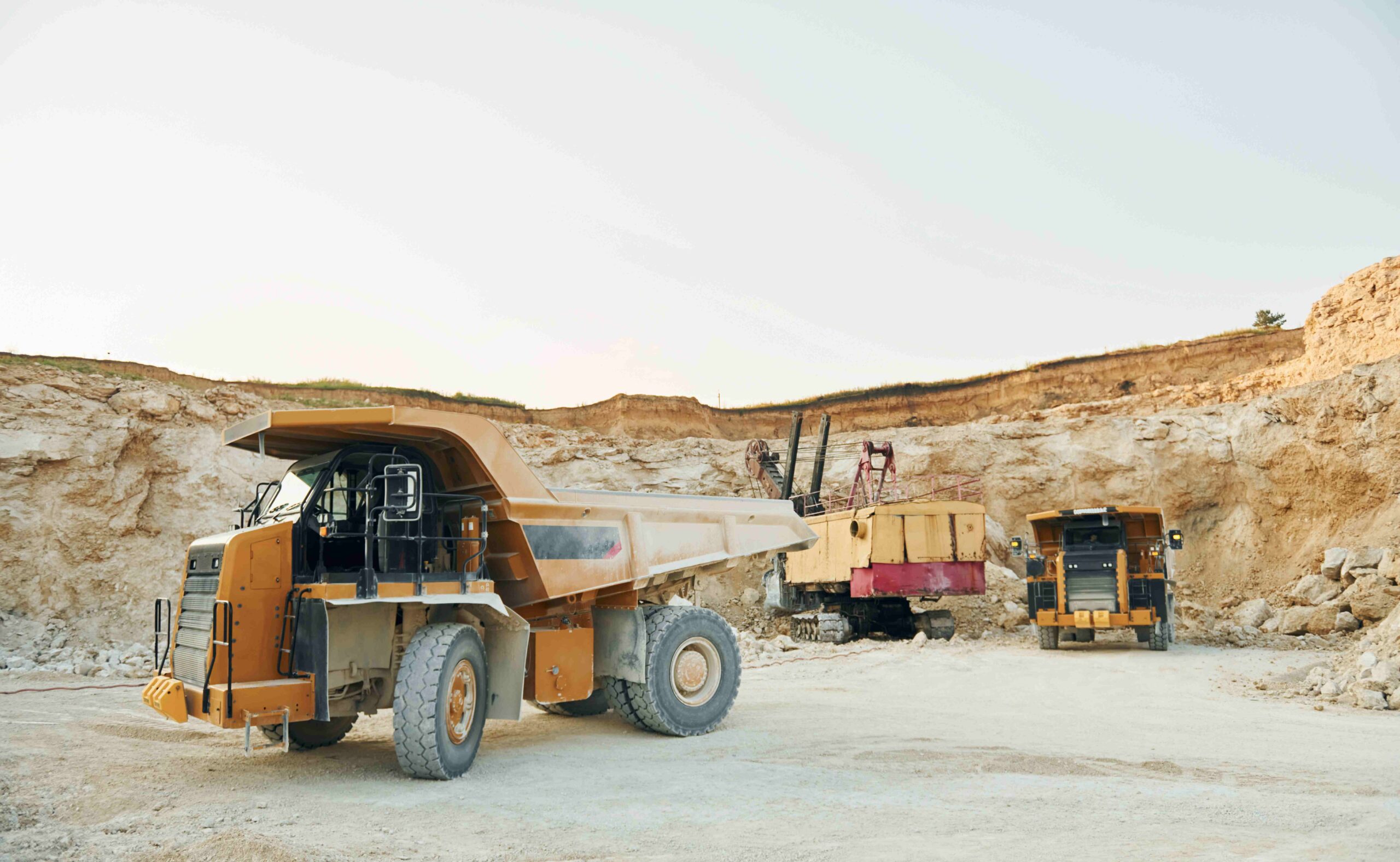
Canada has long enjoyed a global reputation for resource wealth, with many mining companies operating remote and high-value sites across the country. But a growing trend in heavy-equipment and cargo theft suggests that operators must rethink how they view security for mines. Even when theft occurs outside mining, the data show that large equipment and mobile assets remain attractive targets. For mining operators, especially in exploration and remote sites, this amounts to a red flag: without robust security controls, your equipment may be next.
Security for Mines in Canada: Rising Heavy Equipment and Cargo Theft
Between 2019 and 2023, thefts of trucks, trailers, cargo loads and heavy equipment in Canada reached an estimated CAD $531 million in value. Truck News+2Équité Association+2
Of that, over $239 million remains unrecovered — a substantial portion of losses that insurance or reclamation efforts have not retrieved. Équité Association+1
Specifically, heavy equipment theft — including machinery, loaders, and smaller excavators — has risen, driven in part by a post-pandemic surge in construction demand and machinery shortages. Insurance Institute+1
Most theft occurs in urban and transport hubs such as the Greater Toronto Area and major construction zones in Alberta. The pattern shows that thieves consistently target high-value, portable equipment that can be moved and resold quickly. Équité Association+2Truck News+2
These statistics do not distinguish mining assets from general heavy equipment; nevertheless, they underscore a national environment in which “unattended assets + poor security controls + high value” equals elevated risk, as outlined in Rising Theft in Canada: What It Means for Gold Mining Operators.
What Security for Mines Means for Canadian Mining Operations
For a remote mining site — whether exploration, development, or production — the risk profile aligns closely with theft-hot zones, with a few additional risk multipliers:
- Mobile equipment such as ATVs, loaders, haul trucks or support vehicles are high-value and often away from constant monitoring.
- Remote camps and staging areas may be unstaffed at certain times (e.g., between rotations), creating windows of opportunity for opportunistic theft.
- Heavy equipment is transportable — much like skid-steers or mini-excavators targeted elsewhere in Canada — making it a potential target if security is weak.
- Equipment maintenance, fuel storage, spare parts, and consumables may be stored onsite and often lack rigorous access control.
Because national theft trends show millions lost — with a high portion unrecovered — mine operators should consider these not as “construction risks” but as “asset protection risks.”
How Gaps in Security for Mines Impact Remote Sites
Imagine a medium-sized exploration site in Northern British Columbia. The site has an ATV fleet used to support drill-rig movement, a loader to handle materials, and an on-site generator. During seasonal winter downtime, when access is minimal, operators reduce on-site presence and fly staff out.
Without GPS tracking, asset tagging, or periodic guard patrols, this equipment becomes an attractive target. Someone gains unauthorized access, possibly via a winter road or unsecured staging area. They load the ATV and loader onto a trailer, disconnect the generator, and remove the equipment from site.
Slightly tighterBecause the assets are untagged and there’s no digital trail, recovery is unlikely.
National heavy-equipment theft data show how this scenario mirrors losses within the $531 million total. A single incident could cost a mine operator hundreds of thousands of dollars—far more than robust security measures.
Why Security for Mines Must Be Treated as Risk Management
Given the upward trend of heavy equipment and cargo theft in Canada, mine operators can no longer rely solely on geography or isolation. The assumption that theft is “low probability” no longer holds. Instead, security must be baked into operations as a core risk-management practice.
Key reasons include:
- Financial protection: Canada has lost over half a billion dollars to theft in five years, increasing downtime, replacement costs, higher premiums, and project delays.
- Asset Value and Portability: Mining equipment tends to be high-value and, in many cases, portable or easily resold, making it especially vulnerable.
- Uncertain Recovery Rates: As shown by national data, a large portion of stolen heavy equipment is not recovered. Insurance Business+1
- Operational Continuity: Theft or loss of key equipment can stall exploration, halt production, or delay development — adding hidden costs far beyond the value of stolen items.
What Mine Operators Should Do — Evidence-Based Security Planning
Based on observed theft trends and the risk profile for mining, here are concrete security measures that operators should consider:
- Asset tagging and telematics: Equip heavy machinery, support vehicles, and portable equipment with GPS tracking, immobilizers, and tamper alarms so movement is tracked and theft detection is rapid.
- Secure storage and access control: Use locked, monitored storage for idle equipment, secure fuel and consumables storage, and perimeter controls for staging areas.
- Periodic patrols and site checks during idle periods: Even during downtime or seasonal inactivity, schedule regular patrols — physical or remote — to monitor assets, infrastructure, and access points.
- Inventory audits and documentation: Maintain accurate asset inventories and audit logs to support insurance claims and recovery efforts.
- Integrated security planning: Security shouldn’t be an afterthought. Embed it into site planning from day one — particularly for remote, fly-in/fly-out or minimally staffed operations.
Conclusion: Don’t Wait for a Loss — Act Now to Protect Your Assets
The national data on heavy-equipment and cargo theft in Canada should serve as a warning sign for mine operators. Although thefts concentrate in construction, transport, and logistics, remote mining operations face the same vulnerabilities with greater risk.
For mining operations, investing in robust security systems—asset tracking, access control, inventory audits, and patrols—is a strategic necessity, not an optional cost. It’s a critical guard against potentially crippling losses, project delays, and reputational damage.
At Western Protection Alliance, we understand the risks. We specialize in remote-site security planning, asset-protection measures, and experienced personnel deployment — designed for the realities of Canadian mining. If your operation has yet to implement comprehensive security controls, now is the time to act.
References
- Équité Association, Cargo & Heavy Equipment Theft Trend Report (2019–2023). Équité Association+2Truck News+2
- “Thieves stole cargo, equipment worth $531 million since 2019 in Canada,” Truck News, June 26, 2024. Truck News
- “Why insurers may see cargo theft rise in 2025,” Canadian Underwriter / Insurance Institute, June 26, 2024. Insurance Institute+1
- “Cargo thefts in Peel Region soar as tractors, trailers worth $16.73M stolen this year,” Truck News, September 2024. Truck News+1
- “Thefts of heavy vehicles and cargo borne by insurers,” Insurance-Portal.ca, July 2024. Insurance Portal