
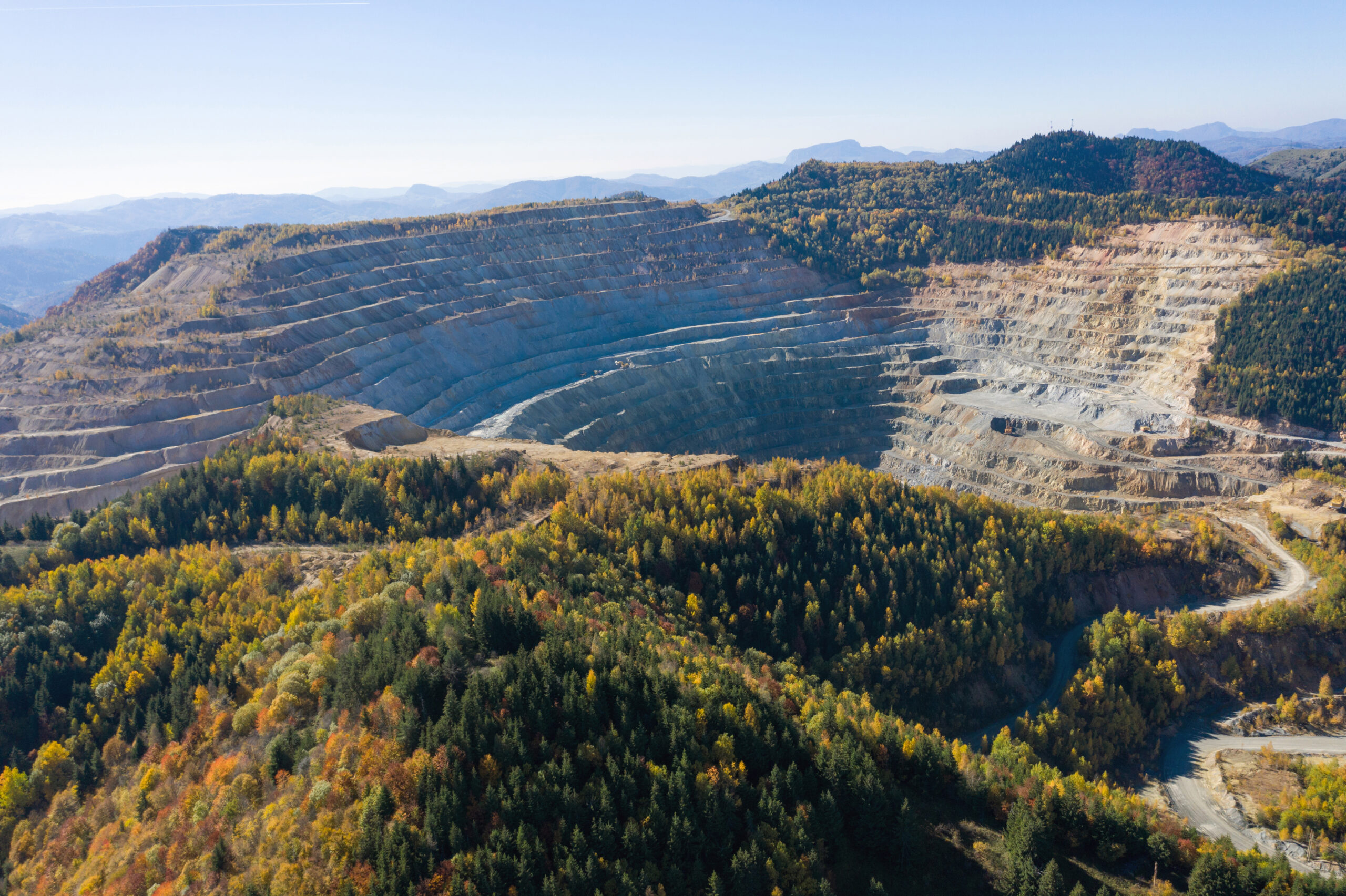
B.C. mine security is becoming increasingly important as British Columbia’s mining sector enters a major growth phase, with haul trucks and equipment activity expanding across mine sites throughout the province.
British Columbia’s mining sector is entering a significant growth phase, with new mines, restarts, and expansions accelerating across the province. Recent industry reporting indicates that 24 mining projects are currently moving forward, representing approximately $39 billion in investment (B.C. mining racking up wins as new mines, expansions move ahead ), signaling a major surge in development activity that will reshape exploration, construction, and operational demands across B.C.
For organizations operating across the mining lifecycle — from exploration contractors to operational support providers — this growth signals more than opportunity. It also means increased activity levels, accelerated timelines, greater logistical complexity, and rising operational risks that must be addressed early.
A Wave of New Mines and the Growing Need for B.C. Mine Security
The current development pipeline includes a broad mix of projects across commodities and development stages. Industry data show the portfolio includes 16 critical-mineral projects, five precious-metal projects, and three steelmaking coal projects, supporting Canada’s push toward electrification and resource security.
Within these projects:
- 15 are entirely new mine developments
- Six are mine restarts
- Two are mine-life extensions
- One is a major mine expansion
At the same time, exploration activity remains strong. Government officials recently highlighted 32 exploration projects currently underway in B.C., further indicating that the pipeline of future developments continues to grow.
This level of activity means that exploration camps, construction sites, and operational mines will all experience increased operational pressure — including more equipment deployment, more contractors, and more remote-site logistics. Early-stage security planning becomes critical at this phase (Early-Stage Mine Security: Protecting Canadian Exploration Camps).
Rising Exploration Spending and Its Impact on Remote B.C. Mine Security Planning
Exploration investment has also climbed significantly. Provincial exploration spending reached approximately $751 million in 2025, up from $552 million in 2024, showing sustained confidence in the region’s resource potential.
However, industry groups note a key shift: much of this spending now supports resource expansion, mine extensions, and advanced-stage development, rather than grassroots prospecting.
As a result, many projects are moving closer to construction and production, where operational readiness, infrastructure protection, and workforce coordination become critical.
Indigenous Partnership Progress and B.C. Mine Security Collaboration
One of the most notable recent approvals is the Eskay Creek gold-silver mine restart, jointly approved by the Province of British Columbia and the Tahltan First Nation. The approval was granted under a Section 7 agreement aligned with the Declaration on the Rights of Indigenous Peoples Act (DRIPA). Importantly, this agreement marks a major milestone in collaborative resource development.
In addition, it highlights the growing role of Indigenous partnership frameworks in advancing mining projects responsibly. As a result, companies operating in northern B.C. will increasingly work within partnership-driven environments that emphasize long-term collaboration, shared economic benefits, and responsible operational planning.
What This Growth Means for Mining Operations
As project approvals accelerate, mining companies and contractors should anticipate a range of operational impacts:
- Increased site activity: More exploration, construction, and restart operations occurring simultaneously across the province
- Greater equipment deployment: Expanded fleets, mobile assets, and infrastructure requirements at remote sites
- Compressed development timelines: Faster transitions from exploration to construction and operations
- Higher logistical complexity: More personnel rotations, contractors, and supply-chain movements
When development cycles accelerate, the risks tied to safety, security, infrastructure readiness, and operational continuity also increase — making early-stage planning essential.
Conclusion: Growth Brings Opportunity — and Responsibility
British Columbia’s mining sector is clearly entering a new investment cycle. With tens of billions in projects advancing, rising exploration spending, and stronger Indigenous partnerships, the province is becoming a key player in global critical-mineral development.
For mining operators, contractors, and service providers, this growth requires proactive planning to keep sites safe and operational. Organizations that integrate workforce planning, infrastructure protection, and remote-site risk management early will be best positioned to support B.C.’s next mining expansion phase.
References
- Business in Vancouver. B.C. mining racking up wins as new mines, expansions move ahead, Jan. 29, 2026.
- Prince George Citizen. Study predicts northern B.C. mining projects will inject billions into the economy, 2026.
- Association for Mineral Exploration (AME). Exploration spending and activity updates, 2026 conference reporting.