
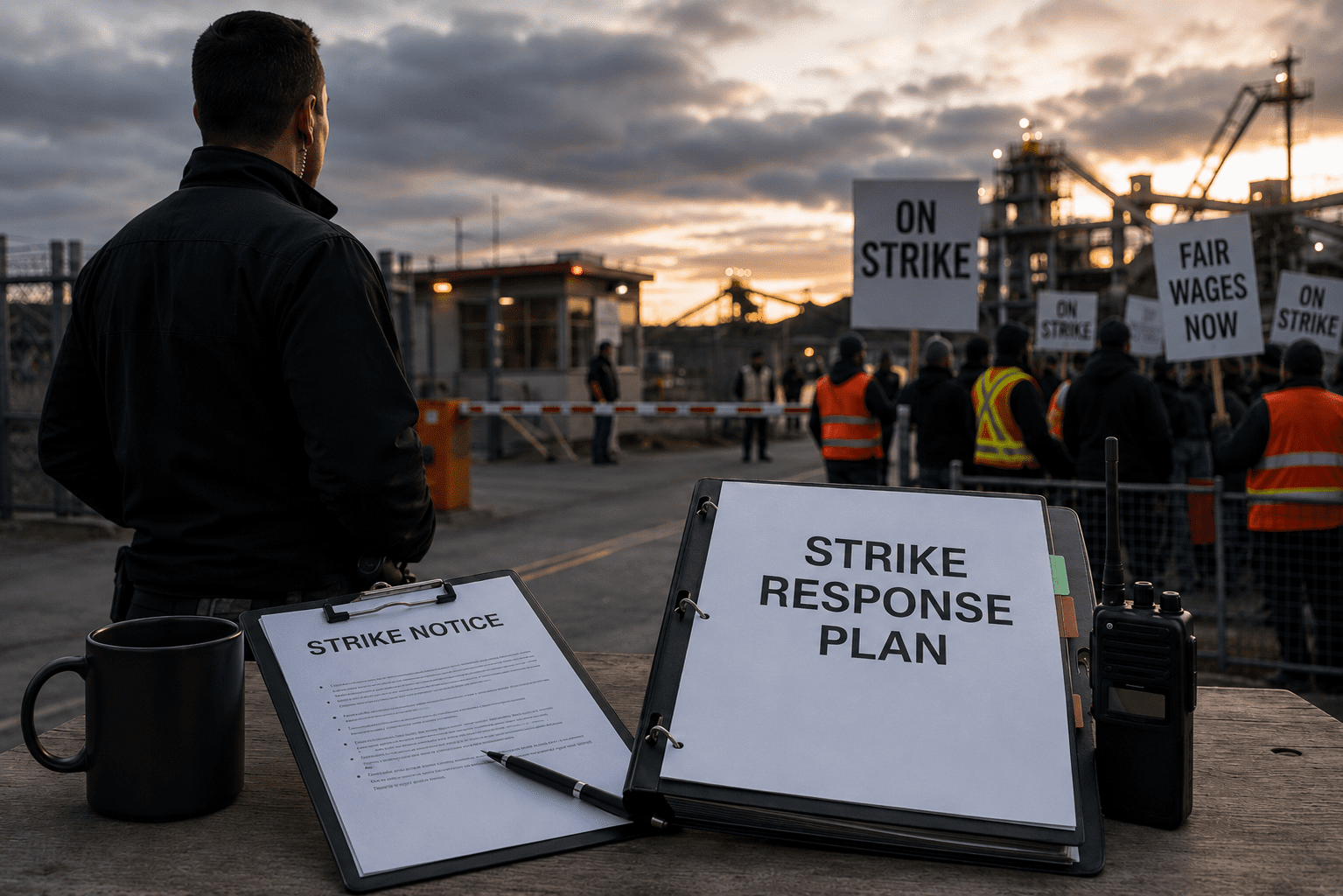
Strike notice can create immediate pressure for employers, especially when it arrives late in the day or close to a weekend.
The first step is not to panic.
Strike notice is a legal countdown. It is not the strike itself. Employers still have time to review the notice, continue bargaining, assemble the right team, activate the contingency plan and prepare the business for a possible strike or lockout.
What matters is how the employer uses that time.

Strike Notice Is Not the Strike Itself
Employers should take strike notice seriously, but they should not freeze or react emotionally.
The notice period gives the employer a short but important window to confirm timelines, review legal options and prepare the organization. If bargaining is still active, negotiations should continue. The union may be using strike notice as leverage, but that does not mean an agreement is impossible.
Stopping negotiations too early can put the employer in a weaker position. Continuing to bargain while preparing for a possible strike keeps the company engaged at the table and protected operationally.
Source: Canada Labour Code – Strike Notice Requirements
Review the Strike Notice With Labour Counsel
Employers should review the strike notice carefully with qualified labour counsel.
This is not the time to rely on general legal advice. Labour disputes involve specific rules, timelines and strategic decisions. The employer should confirm the notice’s validity, review the timing, consider whether to issue lockout notice and identify any obligations that apply before the dispute becomes active.
The legal review should happen immediately, but it should not be the only step. Legal advice should feed into the broader operational plan.
Source: Canada Labour Code – Lockout Notice Requirements
Assemble the Strike Notice Response Team
After receiving strike notice, employers should bring the right response team together quickly.
That team may include labour counsel, senior management, operations leadership, human resources, communications support, financial advisors and a qualified strike security provider.
Each person should have a clear role. Labour counsel reviews legal options. Operations identifies critical business functions. Communications prepares internal and external messaging. Finance assesses business exposure. Security reviews access points, evidence procedures, strike protocols and site vulnerabilitie
Employers should organize the response team before pressure builds, not try to assemble it at the gate.
Activate the Contingency Plan
Strike notice should trigger the company’s contingency plan.
The employer should review immediate operational risks, including critical business functions, supply chain vulnerabilities, transportation routes, customer obligations, staffing needs, site access points and security concerns.
This is also the time to identify any weak points in the plan. This is also the time to identify weak points in the plan. The company should review critical suppliers, vulnerable entrances, management transportation needs, customer communication requirements and any facilities or routes that may face disruption.
Even a basic contingency plan is better than no plan. But if the company is only starting after strike notice arrives, every hour matters.
Protect Operations Before the Strike Starts
Employers should not wait for the first picket line to appear before protecting the operation.
Strike security should be involved before the dispute becomes active. A qualified provider can help assess access points, identify vulnerabilities, prepare evidence procedures, support staff movement, assist with supplier access and reduce confusion if picketing starts.
The goal is not confrontation. The goal is business resilience.
Employers should focus on staff safety, product movement, site continuity, customer obligations and how the company will operate if access becomes difficult.
Source: BC Labour Relations Board – Strikes, Lockouts, Picketing, and Replacement Workers
Prepare Evidence Procedures Before the Picket Line
Evidence collection should be ready before the picket line goes up.
If access is blocked, vehicles are delayed, staff are threatened, property is damaged or lawful movement is interfered with, the employer needs accurate records. Evidence may include video, photographs, CCTV footage, incident reports, access logs, witness statements, affidavits and communication records.
Those procedures should be clear before the dispute begins. Employers should know who records incidents, how reports are prepared, where evidence is stored, who reviews it and when legal counsel receives updates.
Poor evidence can weaken the employer’s position. Proper evidence can support decision-making, police communication and legal strategy.
Source: Canada Evidence Act – Business Records
Communicate Early and Clearly After Strike Notice
Employers should begin clear communication immediately after receiving strike notice.
Employees need to know what the company expects. Managers need to know who makes decisions. Suppliers need to know whether deliveries will continue. Customers may need reassurance. The media may require a prepared and consistent message.
The company should identify its spokesperson early. That person may be internal or external, but the message should be accurate, controlled and professional.
Good communication builds confidence. Poor communication creates uncertainty.
Police Communication Should Be Planned
Employers should not assume police will manage the company’s access plan.
Police involvement depends on the circumstances. Employers should prepare clear, factual information before problems escalate. Management and security should understand who contacts police, what information will be provided and what evidence exists to support the company’s position.
This helps prevent confusion if police attend the site. It also helps the employer communicate without exaggerating, escalating or relying on assumptions.
Source: Toronto Police Service – Labour Disputes
Use Qualified Strike Security
Not every guard company is a strike security provider.
Labour disputes require personnel who understand picket line protocol, evidence collection, access control, escalation procedures, police communication and the difference between observing, documenting and inflaming a situation.
Employers under pressure sometimes default to whoever is available locally. That can create risk if the provider lacks labour dispute experience.
Strike security should support the company’s overall strategy. It should not create more confusion at the gate.
Strike Notice Should Trigger Action
The best time to prepare for strike notice is before it arrives.
Employers that plan early are usually in a stronger position. They understand their supply chain, access points, staffing options, communications process, evidence procedures, security needs and legal strategy before the countdown begins.
Once strike notice is served, the employer should move quickly but not react emotionally. Continue bargaining. Review the notice. Assemble the right team. Activate the contingency plan. Protect the operation. Prepare evidence procedures. Communicate clearly.
At Western Protection Alliance, labour dispute security is not just about placing personnel at a picket line. It is about helping employers protect access, safety, documentation, communication and business continuity during a high-risk period.
If your organization has been served with strike notice, every hour before the strike deadline should be used to strengthen the company’s position, protect people and prepare the business for what may come next.
Sources
- Canada Labour Code – Strike Notice Requirements
https://laws-lois.justice.gc.ca/eng/acts/L-2/section-87.2.html - Canada Labour Code – Lockout Notice Requirements
https://laws-lois.justice.gc.ca/eng/acts/l-2/page-10.html - BC Labour Relations Board – Strikes, Lockouts, Picketing, and Replacement Workers
https://www.lrb.bc.ca/strikes-lockouts-picketing-and-replacement-workers - Canada Evidence Act – Business Records
https://laws-lois.justice.gc.ca/eng/acts/c-5/section-30.html - Toronto Police Service – Labour Disputes
https://www.tps.ca/demonstrations/labour-disputes/ - Western Protection Alliance – Served With a Strike Notice? Do This First https://youtu.be/HoI5_9hxtTs?si=w5wfG-KxVGffcm-x