
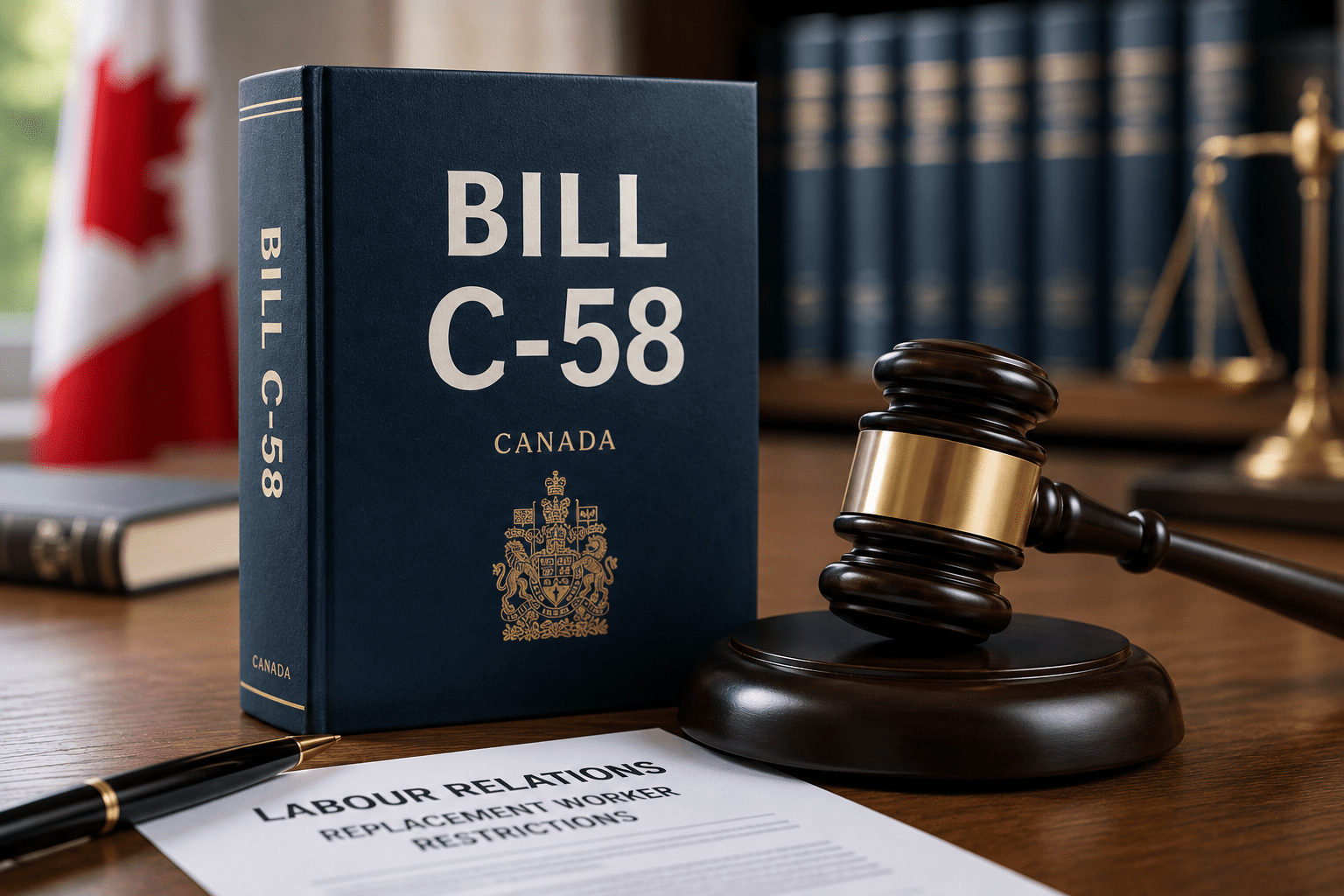
Bill C-58 has changed the labour dispute planning environment for federally regulated employers in Canada. By restricting the use of replacement workers during legal strikes and lockouts, the legislation creates new operational risks for companies that rely on continuous staffing, transportation, suppliers, rail, ports, or remote site logistics.
For mining companies, the issue is not limited to the mine site itself. A disruption involving a railway, port, contractor, fuel provider or key supplier can quickly affect production, product movement, camp operations and operational continuity. That is why Bill C-58 should be treated as more than a legal update. It should be treated as a planning issue.
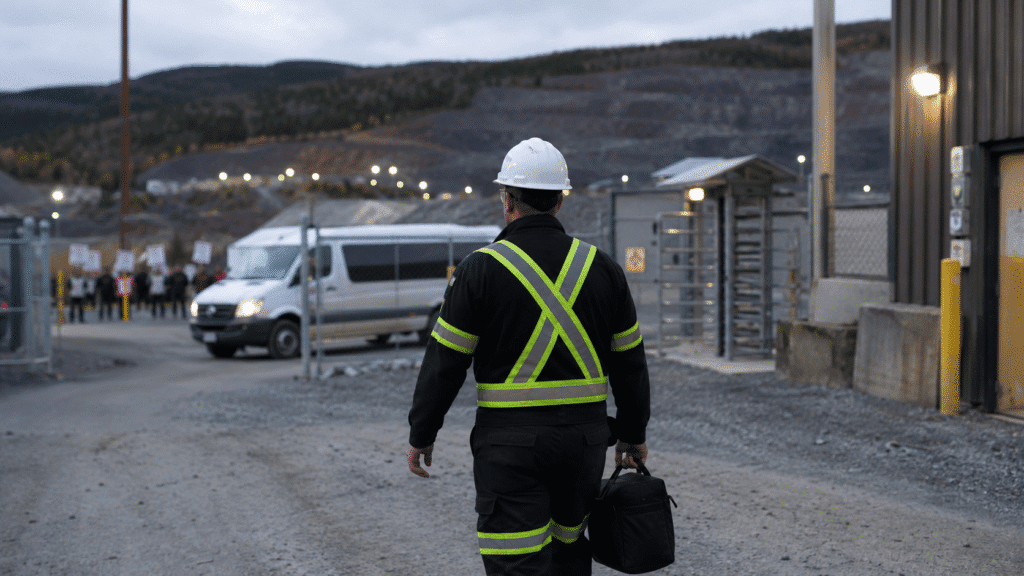
Labour Disruptions Can Stop Operations Quickly
Labour disruptions can create immediate pressure on employers. A company can move from full production to restricted operations within hours. This can happen when workers strike, suppliers stop moving, rail service slows or access points become difficult to manage.
The risk is not limited to the company’s own workforce. A mine may still be operating internally, but it can suffer if a port, railway, supplier, fuel provider, contractor or transportation partner becomes involved in a labour dispute.
Statistics Canada tracks work stoppages involving strikes and lockouts of 10 or more person-days not worked. Its data shows that Canada continues to experience major disruption from labour disputes, including millions of person-days not worked in recent years.
Source: Statistics Canada – Work stoppages in Canada, by jurisdiction and industry
What Bill C-58 Changes
Bill C-58 restricts how federally regulated employers can use replacement workers during legal strikes and lockouts. As of June 20, 2025, the federal government prohibits federally regulated employers from using replacement workers to perform the work of unionized employees who are on strike or locked out, subject to limited exceptions.
For employers, this changes the planning environment. A company cannot assume replacement staffing will remain available as a simple operational fallback. It must understand which workers can lawfully perform which duties, what exceptions may apply and what documentation may be needed if its actions are challenged.
The federal government also states that violations may become an unfair labour practice and can lead to fines of up to $100,000 per day if prosecuted and convicted.
Source: Government of Canada – Replacement Workers Legislation Now in Force
Why Bill C-58 Matters for Mining Companies
Mining companies may think of labour disruption as a direct workforce issue. In reality, the risk is broader.
Mining depends on transportation, fuel, contractors and equipment. It also depends on camp supplies, maintenance providers, rail networks, port access and product movement. If any part of that chain experiences a labour disruption, the mine may feel the impact even if its own workforce remains active.
This is especially important for remote mines. A remote site may have limited road access, limited storage capacity, seasonal transportation challenges or heavy reliance on outside suppliers. If the supply chain slows down, the cost of delay can rise quickly.
Federally regulated sectors include transportation, rail, ports, telecommunications and other industries under federal jurisdiction. The Canada Industrial Relations Board also identifies uranium mining and processing as part of the sectors under its Canada Labour Code jurisdiction.
Source: Government of Canada – Federally Regulated Industries and Workplaces
Rail and Port Disruptions Can Spread Through the Supply Chain
Rail and port disruptions can affect mining operations even when the labour dispute is not at the mine site itself.
Canadian rail and port networks move major volumes of raw materials, equipment and export products. When those networks slow down, the impact can spread across mining, agriculture, manufacturing, construction, energy and international trade.
In 2024, Moody’s estimated that a Canadian rail stoppage could cost the economy more than $341 million per day. Reuters also reported that a rail halt could affect North American supply chains. Canadian and U.S. freight movement are closely connected.
Source: Reuters – Canada rail stoppage could cost C$341 million per day, Moody’s says
Pre-Strike Planning Under Bill C-58
One of the biggest mistakes employers make is waiting too long to plan.
For federally regulated employers, labour disruption planning should begin well before a strike or lockout becomes active. Before a notice to bargain arrives, the employer should already understand its vulnerabilities, staffing limits, lawful options, access plan, documentation process and communication structure.
This is especially important under Bill C-58. Employers need to understand what work can continue, who can perform it, what exceptions may apply and how to document decisions. If the employer waits until the dispute begins, it may not have enough time to build a compliant and effective response.
Evidence Collection Under Bill C-58
Evidence collection is no longer only about documenting what happens on the picket line.
Employers also need clear records of planning, decisions, communications, staffing choices and operational requirements. If parties dispute worker use, maintenance of activities, access issues or alleged unfair labour practices, documentation may become critical.
The company should keep workforce plans, job descriptions, contractor roles, access logs, incident reports, video, photographs, supplier communications and legal instructions. These records should explain why management made key decisions.
Professional security can support this process by documenting site conditions, access issues, vehicle movement, picket line activity, delays, incidents and interactions. The goal is not to create confrontation. The company should preserve an accurate record that supports management, labour counsel and operational decision-makers.
Security Planning for Labour Disputes and Blockades
In this environment, security should not be treated as a last-minute service.
Professional security personnel can help manage access points, reduce confusion, support lawful movement, observe and document incidents, communicate with site leadership and help maintain order during a difficult period.
For remote mining companies, planning should also include blockade risk, supplier delays and transportation disruption. It should also address camp access, fuel delivery, executive movement, emergency access and product movement.
Bill C-58 Requires Earlier Labour Planning
Bill C-58 does not remove the need for employers to operate. It changes how employers must prepare.
Mining companies should review their exposure to labour disruption, transportation dependency, replacement worker restrictions, supply chain delays, protest activity, blockade risk and documentation requirements before pressure arrives.
At Western Protection Alliance, labour dispute and remote site security are not just about placing personnel at a gate. They are about helping employers protect access, safety, documentation, communication and operational continuity during high-risk periods.
If your organization depends on rail, ports, suppliers, contractors or remote site logistics, the time to plan is before the disruption begins. Once the pressure arrives, every gap in preparation can become more expensive, more visible and harder to correct.
Sources
- Government of Canada – Replacement Workers Legislation Now in Force
https://www.canada.ca/en/employment-social-development/news/2025/06/protecting-canadian-labour-replacement-workers-legislation-now-in-force.html - Statistics Canada – Work stoppages in Canada, by jurisdiction and industry
https://www150.statcan.gc.ca/t1/tbl1/en/tv.action?pid=1410035201 - Government of Canada – Federally Regulated Industries and Workplaces
https://www.canada.ca/en/services/jobs/workplace/federally-regulated-industries.html - Reuters – Canada rail stoppage could cost C$341 million per day, Moody’s says
https://www.reuters.com/business/canada-rail-stoppage-could-cost-c341-mln-per-day-moodys-says-2024-08-21/ - Western Protection Alliance – Bill C-58 Explained: Canada’s Replacement Worker Ban https://youtu.be/LCO15dF87LY?si=HH5YZR_SUt3ielOR