
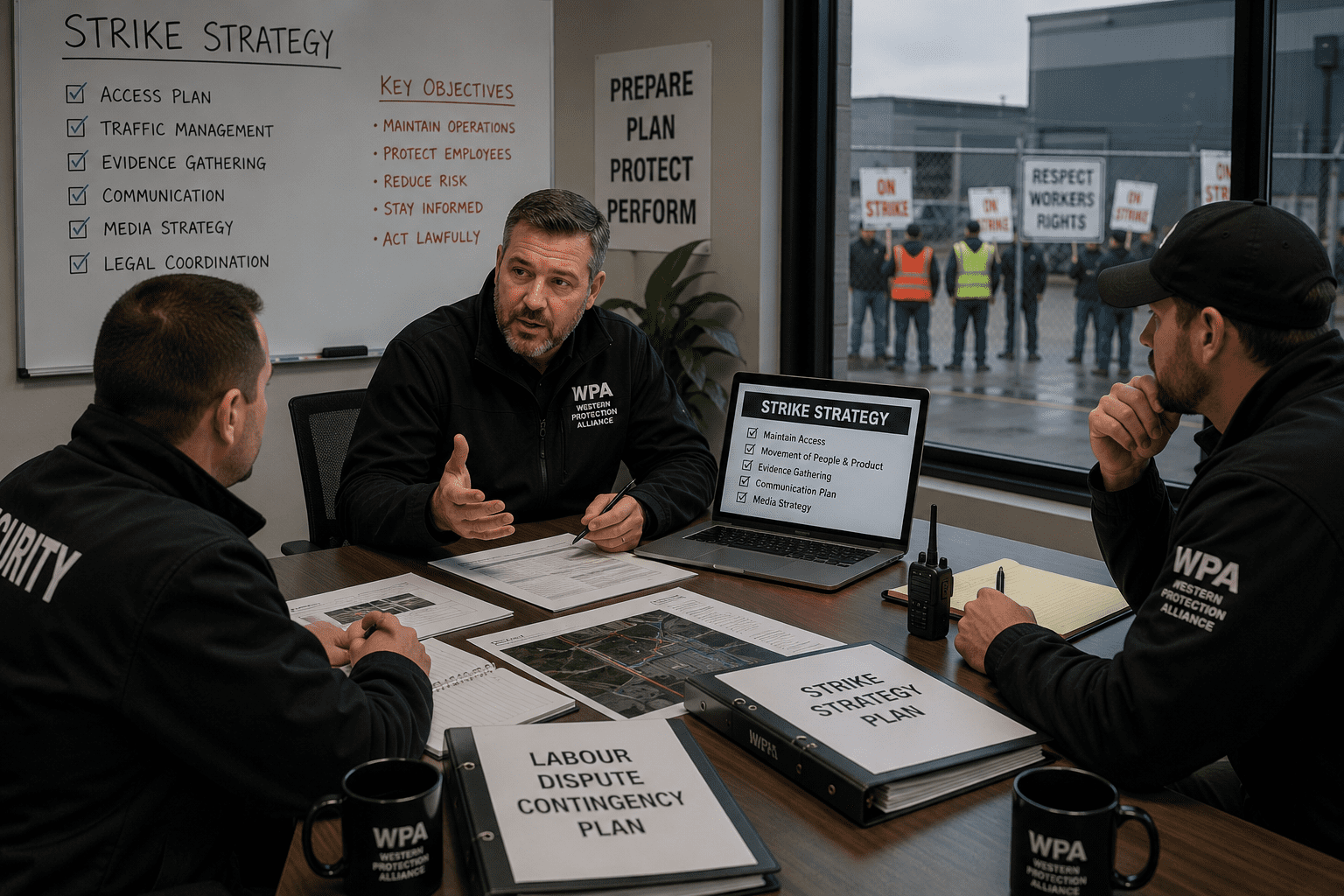
Strike strategy matters before a picket line becomes active. When a strike, lockout or labour disruption begins, employers need more than a defensive plan. They need a lawful, professional and proactive approach that helps maintain access, gather evidence, communicate clearly and protect operational continuity.
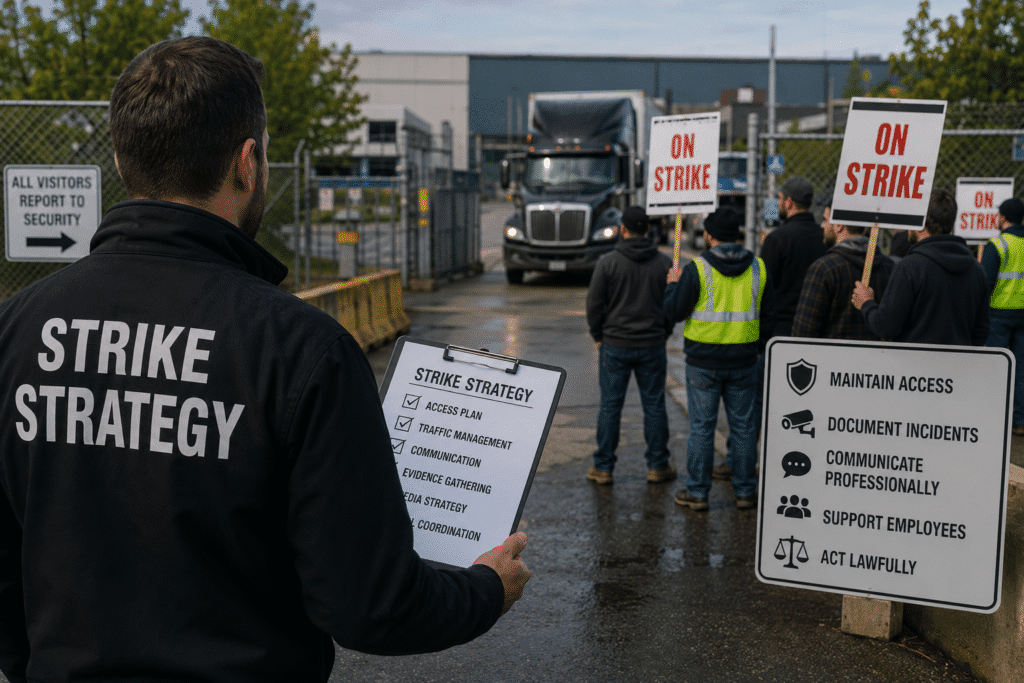
Why Strike Strategy Matters During a Labour Dispute
Many employers become cautious once a picket line forms. They worry about staff crossing the line, supplier access, police involvement, media attention and whether product can continue moving in or out.
Without a clear labour dispute contingency plan, that caution can turn into paralysis.
If the company stops moving people, vehicles and product unnecessarily, the picket line can begin to control the pace of the operation. Staff may lose confidence. Suppliers can become uncertain. Instead of leading, management may start reacting. The union may also read hesitation as weakness.
A defensive approach can leave the employer waiting for information instead of creating it.
Source: Canada Industrial Relations Board – Labour Relations: Illegal Strikes and Lockouts
An Offensive Strike Strategy Creates Information
A strong strike strategy helps employers gather the information they need to make better decisions.
When the company continues lawful and planned movement through the picket line, it learns what is actually happening. The company can confirm whether picketers are delaying vehicles, threatening staff, blocking suppliers, remaining orderly or creating conditions that require police involvement. Is evidence needed for legal counsel?
Employers cannot answer those questions from inside a boardroom.
Action creates information. With a proper plan, that information can help the company adjust its traffic strategy, communicate with staff, brief legal counsel, update police and decide whether further action is required.
This does not mean acting aggressively. It means acting deliberately.
Movement Across the Picket Line Matters
One of the most important parts of a strike strategy is the controlled movement of people, goods and product.
Employers should identify who needs site access, which suppliers are critical, what product must move and how often crossings need to occur. That plan may include adjusted delivery schedules, reduced vehicle crossings, staff transportation, controlled staging areas, escort planning and clear instructions for employees and suppliers.
Each crossing should have a purpose.
When a company moves people and product in a lawful, organized and predictable way, it sends an important message. It shows employees, suppliers, police, legal counsel and the picket line that the employer has a plan and intends to operate within its rights.
Source: BC Labour Relations Board – Strikes, Lockouts, Picketing, and Replacement Workers
Confidence Matters During a Labour Dispute
A clear strike strategy does more than move vehicles. It creates confidence.
Employees need to know what the company expects of them. Suppliers need to know whether deliveries are continuing. Management needs accurate updates. Security needs defined duties. Police need clear information if they become involved. Labour counsel needs documentation if legal remedies become necessary.
When the employer looks uncertain, everyone else becomes uncertain too.
A strong plan helps reduce that uncertainty. It gives the company a process for access control, communication, evidence gathering, incident escalation and legal coordination. It also helps prevent different departments from making different decisions under pressure.
Evidence Gathering Supports the Strike Strategy
An offensive strike strategy depends on documentation.
If picketers delay vehicles, block entrances, threaten staff, damage property or interfere with lawful access, the company needs proper evidence. That may include video, photographs, incident reports, delay logs, witness notes, access records and communication records.
The company should not gather evidence casually. The company should plan evidence collection before the dispute begins. Management should know who records incidents, how reports are written, where files are stored, who reviews the evidence and when legal counsel receives updates.
Without that structure, the team may miss or poorly document important incidents.
In a labour dispute, the employer may know what happened. The harder part is proving it.
Police Communication Should Be Planned
Police may attend a labour dispute, but employers should not assume officers will manage the company’s access plan.
Circumstances drive police involvement, including public safety concerns, threats, blocked access, property damage or situations that require on-site assessment. Employers should prepare to provide clear, factual and organized information if police become involved.
That means security personnel and management should understand what to report, who contacts police, what evidence exists and how the company will communicate without exaggerating or escalating the situation.
Good police communication starts before the dispute becomes chaotic.
Source: Toronto Police Service – Labour Disputes
Media Strategy Should Not Be an Afterthought
Labour disputes can quickly move into the public eye.
If the employer waits too long to explain its position, the public story may already be shaped by someone else. That can affect employees, suppliers, customers, local communities and the company’s reputation.
A media strategy does not need to be complicated, but it should be prepared. The company should know who speaks publicly, what message is appropriate, what information remains confidential and how it will respond if misinformation spreads.
The goal is to tell the company’s side clearly, professionally and early enough that it is not always playing catch-up.
Offensive Does Not Mean Confrontational
The word “offensive” can sound aggressive, but in a labour dispute it should mean prepared, lawful and proactive.
An offensive strike strategy does not mean provoking the picket line or escalating conflict. It means the employer has a plan to maintain lawful movement, document incidents, communicate with stakeholders and protect operational continuity.
That approach is very different from reacting emotionally or improvising at the gate.
A company that plans properly can be firm without being reckless. With the right plan, a company can protect access, gather evidence and communicate clearly without creating unnecessary conflict or overstating its position.
A Strong Strike Strategy Protects Options
A labour dispute can change quickly. The employer may need to adjust traffic movement, update staff instructions, communicate with police, support suppliers, brief legal counsel, pursue injunctive relief or respond to media attention.
A defensive posture limits options.
A proactive strategy protects them.
At Western Protection Alliance, labour dispute security is not just about placing personnel at a picket line. It is about helping employers maintain lawful access, gather usable evidence, support communication, reduce uncertainty and protect operational continuity during a high-risk period.
Organizations should build a strike strategy before a strike, lockout or active picket line begins. Once the picket line forms, every unclear instruction, missed report, delayed crossing or unplanned media response can make the situation harder to control.
Sources
- Canada Industrial Relations Board – Labour Relations: Illegal Strikes and Lockouts
https://cirb-ccri.gc.ca/en/about-appeals-applications-complaints/labour-relations-unlawful-strike-lockout - BC Labour Relations Board – Strikes, Lockouts, Picketing, and Replacement Workers
https://www.lrb.bc.ca/strikes-lockouts-picketing-and-replacement-workers - Toronto Police Service – Labour Disputes
https://www.tps.ca/demonstrations/labour-disputes/ - Western Protection Alliance – Strike Planning: Why Offense Beats Defense in Canada https://youtu.be/HuPMAVu6Tg8?si=T-g8HI6llDi60DC5