
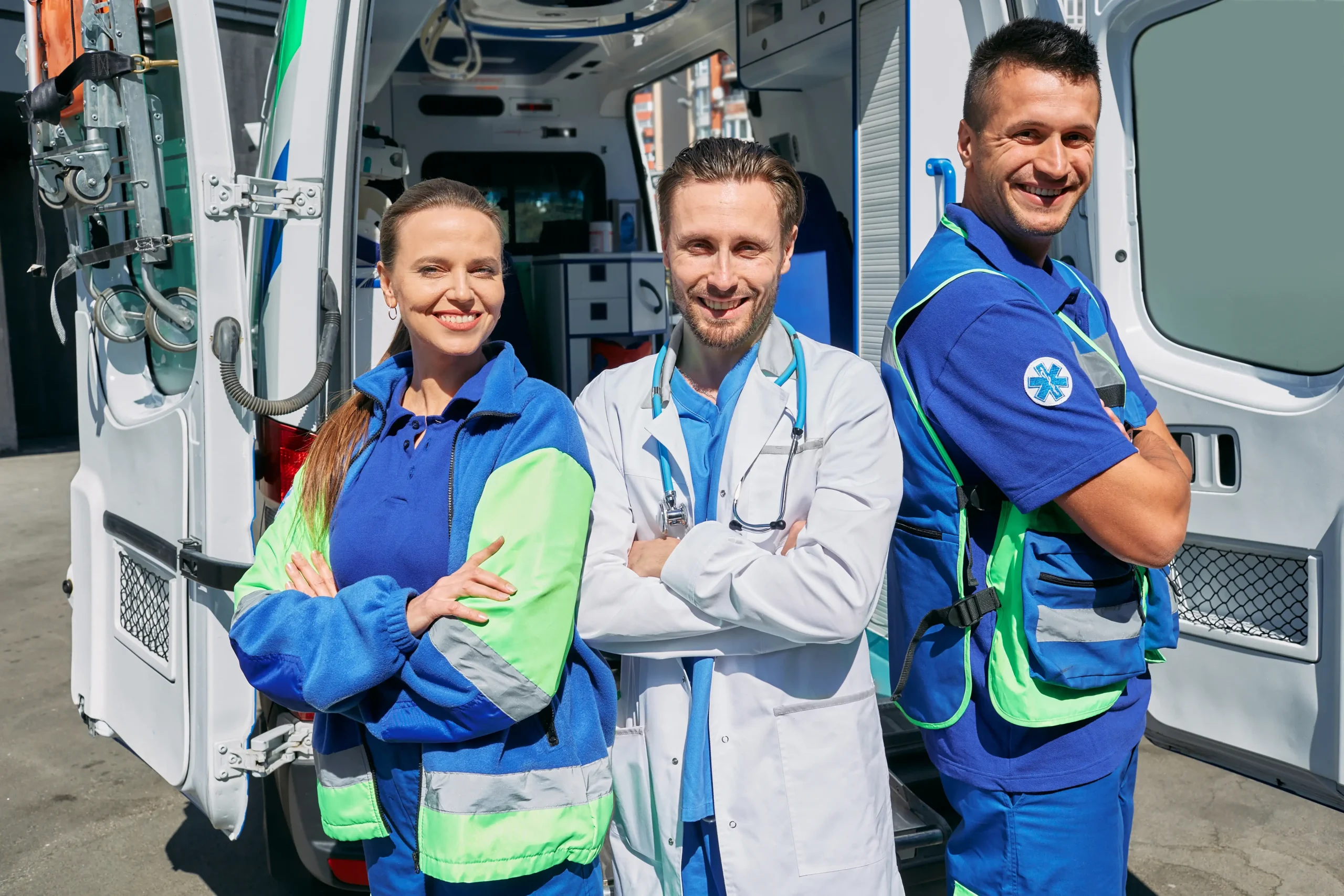
Remote mine medical teams help keep Canadian mining operations running when medical incidents happen far from hospitals and emergency services. They also depend on the right medical personnel being available when something goes wrong.
In a remote mine environment, a medical incident can quickly become an operational issue. A worker may be injured on an access road, become ill in camp, require assessment before transport, or need support while waiting for medevac or ground ambulance. When the site is far from a hospital, the level of medical coverage matters.
The right remote mine medical team helps protect workers, support supervisors, reduce confusion and keep the operation moving. The wrong level of coverage can leave a site underprepared when an incident requires more than basic first aid.
Below are five medical roles commonly considered for remote mining and industrial environments in Canada.
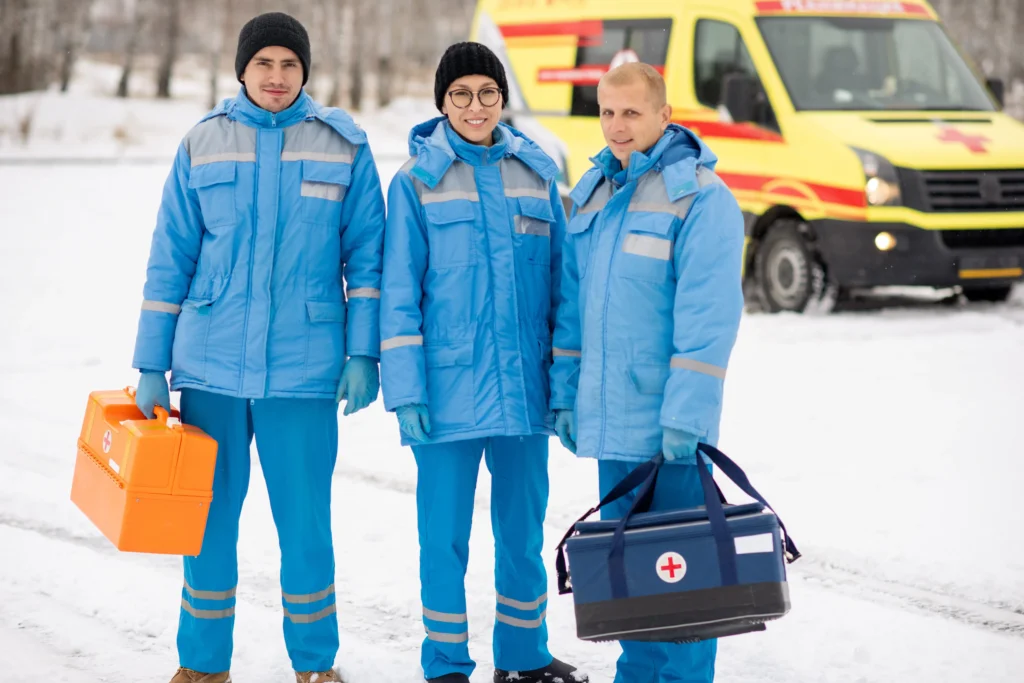
1. Advanced First Aid / OFA Level 3
In British Columbia, what many employers historically referred to as Occupational First Aid Level 3, or OFA3, now aligns with Advanced First Aid terminology. WorkSafeBC notes that as of November 1, 2024, valid OFA Level 1, 2 and 3 certificates are accepted as equivalent to basic, intermediate and advanced first aid respectively until their expiry date.
Source: WorkSafeBC
Advanced first aid personnel often form the foundation of a remote mine medical program. Sites may deploy them across camps, access points, road systems and work areas.
They can also work well in dual-certified roles. For example, one person may support access control during normal operations. If a rollover, fall or equipment incident occurs, that person can shift into a first aid role.
This model gives remote sites more flexibility. It can reduce response gaps while supporting both safety and site control.
2. Primary Care Paramedic
A Primary Care Paramedic, or PCP, brings a higher level of medical capability than advanced first aid.
British Columbia licenses paramedics as Emergency Medical Assistants. BC Health Careers notes that paramedics provide emergency medical care outside hospitals and transport patients when they need advanced or specialized care.
Source: BC Health Careers
In a remote mining environment, a PCP often assesses, stabilizes and prepares a patient for transport. That transport may involve an ambulance, industrial ambulance, helicopter, fixed-wing aircraft or another medevac process depending on geography and site planning.
For remote mine operators, PCP coverage can create a stronger bridge between the incident scene and the hospital.
3. Advanced Care Paramedic
An Advanced Care Paramedic, or ACP, provides a higher level of paramedic capability.
An ACP may be appropriate for larger, higher-risk or more remote operations where medical incidents could involve longer delays before hospital care. ACPs generally operate at a higher clinical level than PCPs and may provide more advanced interventions within their licensed scope and under applicable oversight.
In B.C., the Emergency Medical Assistants Licensing Board is responsible for examining, registering and licensing emergency medical assistants, including different paramedic licence levels.
Source: Government of British Columbia
For remote mining sites, the question is not simply whether an ACP has more training. The question is whether the site’s risk profile justifies that level of coverage. Serious hazards, long evacuation times, extreme weather, high-risk roads or a large camp population may support a higher level of medical deployment.
4. Registered Nurse
A Registered Nurse, or RN, can serve a different function than a paramedic in a remote mining environment.
Paramedics are often field-response oriented. They attend incidents, stabilize patients and prepare them for transport. Nurses are more often used in clinical or ongoing care environments. In a remote mine or camp setting, an RN may support workers who feel unwell, have non-emergency health concerns, need monitoring or require assessment before the site decides whether transport is necessary.
This can be especially valuable at larger or more isolated sites. Camp personnel may feel more comfortable knowing there is a nurse available for health questions, minor illness, follow-up checks or concerns that do not immediately look like emergencies.
An RN may help reduce unnecessary escalation by assessing issues early and supporting continuity of care across longer rotations.
5. Nurse Practitioner
A Nurse Practitioner, or NP, represents one of the highest levels of clinical support that may be considered in a remote deployment.
The Canadian Nurses Association describes nurse practitioners as a separately regulated class of nurses with additional education and experience. NPs can diagnose and treat illnesses, order and interpret tests, prescribe medications and perform medical procedures within their legislated scope of practice.
Source: Canadian Nurses Association
In practice, nurse practitioners are rarely deployed to remote mine sites compared with advanced first aid personnel, paramedics or registered nurses. Their capability may be valuable, but the cost, availability and operational need must justify the deployment.
An NP may make sense for a very large, isolated or long-term site where the medical profile requires higher clinical capacity. In most cases, a site can meet its needs through a combination of advanced first aid, paramedic support, nursing support and medical oversight.
Medical Oversight Matters for Remote Mine Medical Teams
For higher-level medical personnel, medical oversight can be critical.
Remote medical teams may face difficult decisions before a patient reaches hospital care. A paramedic or other medical provider may need guidance, authorization or clinical support during a complex case. Medical oversight gives the provider access to a physician or medical director who can help guide decisions within the appropriate scope and protocol.
This matters in remote mining because geography can delay access to definitive care. A remote site may need to stabilize a patient, prepare for transport and manage care while waiting for weather, aircraft, road access or ambulance availability.
Choosing the Right Remote Mine Medical Team
Not every mine needs the same medical model.
A smaller exploration site may need advanced first aid personnel with strong emergency response planning. A larger camp may require PCP or RN support. A high-risk or highly isolated operation may consider ACP coverage or broader clinical support. The right answer depends on site size, hazard profile, distance from hospital, weather, road access, camp population, regulatory requirements and evacuation options.
WorkSafeBC’s first aid requirements emphasize that employers must assess the workplace and determine appropriate first aid supplies, equipment, facilities and services based on the workplace’s needs.
Source: WorkSafeBC
For mine operators, that assessment should reflect real site conditions. How far is the site from help? How quickly can a patient be transported? What injuries are most likely? Who manages the first critical minutes?
Remote Mine Medical Teams Protect Continuity
Remote mine medical teams do more than respond to injuries. They help keep sites running.
A well-planned medical program can reduce confusion during emergencies, improve worker confidence, support regulatory compliance, help supervisors make better decisions and create a clearer path from incident to treatment.
At Western Protection Alliance, remote mine medical support is built around the realities of Canadian mining environments. That includes remote locations, industrial hazards, transportation challenges, camp life, access control, dual-certified personnel and the need for reliable medical oversight.
If your operation is reviewing its first aid coverage, paramedic deployment, camp medical model or emergency response planning, the best time to assess the program is before the incident occurs.
Sources
- WorkSafeBC – First Aid Attendant Certification
https://www.worksafebc.com/en/health-safety/education-training-certification/first-aid-attendant - BC Health Careers – Paramedics
https://bchealthcareers.ca/professions/allied-health-professionals/paramedics/ - Government of British Columbia – Emergency Medical Assistants Licensing Board
https://www2.gov.bc.ca/gov/content/health/about-bc-s-health-care-system/partners/colleges-boards-and-commissions/emergency-medical-assistants-licensing-board - Canadian Nurses Association – Nurse Practitioners
https://www.cna-aiic.ca/en/nursing/advanced-nursing-practice/nurse-practitioners - WorkSafeBC – First Aid Requirements
https://www.worksafebc.com/en/health-safety/create-manage/first-aid-requirements - Western Protection Alliance – Remote Mine Security
https://www.westernalliance.ca/remote-mine-security-2/ - Western Protection Alliance – Remote Mine Medical Teams: 5 Roles That Keep Sites Running https://www.youtube.com/watch?v=qGiZnvM6gZY