
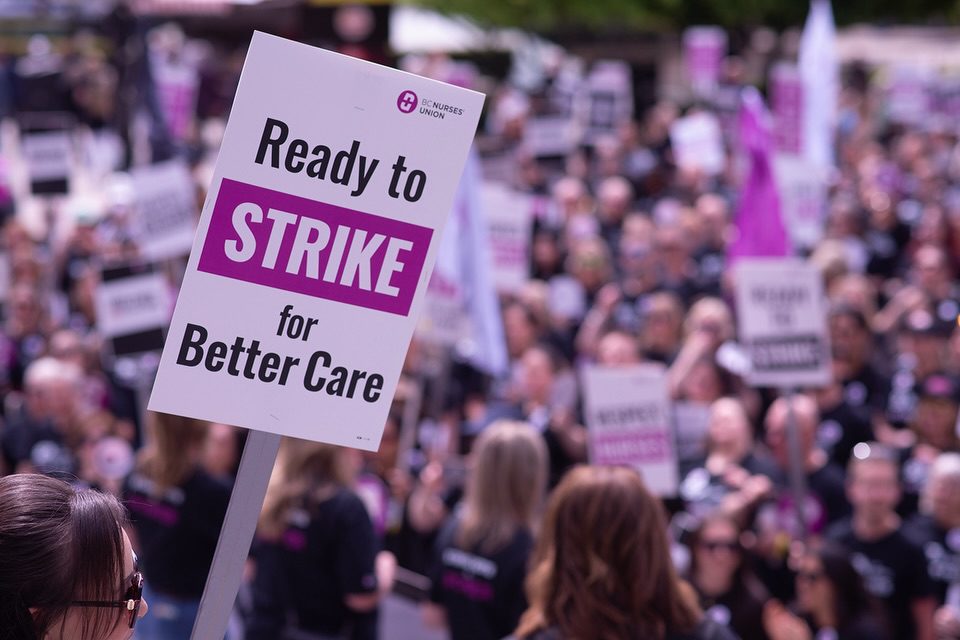
The BC nurses strike has become one of the most significant labour disputes currently taking place in British Columbia.
Much of the public discussion has focused on staffing shortages, patient care, wages and pressure inside the healthcare system. For employers, however, the dispute also offers a broader lesson: labour disputes test preparation long before they test picket lines.
The BC nurses strike is not only a healthcare story. It is a management preparedness story.
When job action begins, every staffing decision, supervisor conversation and public statement carries greater significance. Employers that prepare early are usually better positioned to maintain operations, communicate clearly and avoid decisions that make a difficult situation worse.
Although this dispute is unfolding in healthcare, the lessons apply across many industries, including mining, construction, transportation, manufacturing, education and municipalities, where collective bargaining can quickly affect day-to-day operations.

What Is Happening in the BC Nurses Strike
Members of the BC Nurses’ Union escalated the dispute by rejecting a tentative agreement recommended by union leadership.
More than 50,000 nurses participated in the strike vote, with 98.2% voting in favour of job action. The union described it as the strongest strike mandate in its history. Members later rejected the tentative agreement by 67%, signalling that many nurses believed the proposal did not fully address their concerns.
Following the rejection, BCNU issued a 72-hour strike notice and nurses began phased job action across the province. Rather than immediately walking off the job, the initial stages focused on refusing non-nursing duties and limiting non-essential overtime while continuing to provide essential healthcare services.
That distinction matters. Labour disputes do not always begin with a full work stoppage. They often start with targeted job action, overtime restrictions, work-to-rule measures or picketing before becoming a larger operational disruption.
For employers, the key lesson is simple: by the time job action begins, preparation should already be complete.
Source: BC Nurses’ Union – BC Nurses Deliver Strongest Strike Mandate in Union’s History
Source: BC Nurses’ Union – Nurses Report Widespread Employer Intimidation as Job Action Expands This Week
Why The BC Nurses Strike Matters Beyond Healthcare
The issues driving the BC nurses’ dispute include staffing shortages, workplace safety, workload, wages and the increasing amount of time nurses spend performing duties outside their professional role.
For employers outside healthcare, the lesson is not about nursing duties specifically. The lesson is about what happens when employees believe unresolved workplace concerns have become operationally unsustainable.
Employers should address workplace concerns early, whether they involve staffing levels, safety, scheduling, overtime, contractor use, compensation or role clarity, before those issues become central bargaining points. By the time negotiations become adversarial, those concerns can quickly affect operations, employee morale and public perception.
This is where labour dispute planning becomes important. Employers need to understand not only the bargaining issues, but also how those issues could affect site access, staffing, communications, documentation and operational continuity if job action begins.
Source: BC Nurses’ Union – BC Nurses Begin Job Action Following Government’s Failure to Respond
Labour Disputes Become Operational Disruptions
A labour dispute is rarely limited to the bargaining table.
Once job action begins, employers may need to manage staffing changes, access issues, contractor coordination, supplier delays, customer communication and media attention. Supervisors may also face increased pressure while day-to-day operations continue.
In mining, construction, manufacturing, transportation and municipal operations, job action can affect site access, shift changes, product movement and safety coverage. It may also disrupt contractors, suppliers, transportation routes, public messaging and operational continuity.
The organization may still have a legal right to operate, but that right becomes harder to exercise without a plan.
Labour disputes create pressure. Poor preparation gives that pressure somewhere to break.
Supervisors Play a Critical Role
Frontline supervisors are often placed in the most challenging position during a labour dispute.
They are expected to maintain operations, respond to employees, follow legal obligations and support organizational decisions, while also avoiding actions that could unintentionally escalate tensions. Many supervisors have little or no formal training on how to manage the workplace once job action begins.
According to the BC Nurses’ Union, nurses have filed more than 1,400 reports alleging employer interference with lawful strike activity. The union says the reports include discipline threats, licence warnings, pressure to ignore job action directives, instructions to continue non-nursing duties and pressure to work unauthorized overtime.
These are allegations, and employers may dispute the characterization of what occurred.
Still, the situation highlights an important lessons for employers. A poorly worded instruction, inconsistent message or emotional conversation may create legal, operational or reputational risk. Clear communication, well-trained supervisors and consistent decision-making help organizations reduce unnecessary conflict while continuing to manage their operations professionally.
Source: Prince George Citizen – BCNU Reports Nurse Intimidation as Picket Lines Begin Forming
What Employers Should Prepare Before Strike Notice
Employers should prepare for labour disputes before strike notice arrives.
Preparation should include supervisor training, contingency planning, communication protocols, documentation procedures and a clear understanding of how job action may affect operations.
Employers should identify operational vulnerabilities early, including staffing gaps, critical duties, contractor needs, supplier dependencies, transportation issues, customer obligations and duties that may become disputed during job action.
For mining, construction, industrial and municipal employers, this planning may include site access, shift changes, contractor arrivals, supplier movement, executive protection, picket line access, evidence collection and labour dispute security.
The goal is not to escalate conflict. The goal is to maintain operations lawfully, communicate clearly and reduce the chance that unprepared managers make the dispute worse.
BC Nurses Strike Lessons for Employers
The BC nurses strike is a reminder that labour disputes rarely begin when strike notice is issued.
They usually develop over months or years as workplace concerns accumulate, bargaining positions harden and trust declines. By the time employees take job action, employers may have already missed opportunities to communicate clearly, prepare supervisors and protect operations.
Labour disputes are rarely defined by the day a strike begins. More often, they are shaped by the preparation, communication and decisions made long before employees ever step onto a picket line.
At Western Protection Alliance, we help employers prepare for labour disputes before they become operational disruptions, including strike planning, picket line access, evidence collection, supervisor coordination and labour dispute security.
Sources
- BC Nurses’ Union – BC Nurses Deliver Strongest Strike Mandate in Union’s History
https://www.bcnu.org/news-and-events/news/2026/bc-nurses-deliver-strongest-strike-mandate-unions-history - BC Nurses’ Union – BC Nurses Begin Job Action Following Government’s Failure to Respond
https://www.bcnu.org/news-and-events/news/2026/bc-nurses-begin-job-action-following-governments-failure-respond - BC Nurses’ Union – Nurses Report Widespread Employer Intimidation as Job Action Expands This Week
https://www.bcnu.org/news-and-events/news/2026/nurses-report-widespread-employer-intimidation-job-action-expands-week - Prince George Citizen – BCNU Reports Nurse Intimidation as Picket Lines Begin Forming https://www.princegeorgecitizen.com/local-news/bcnu-reports-nurse-intimidation-as-picket-lines-begin-forming-12525936