
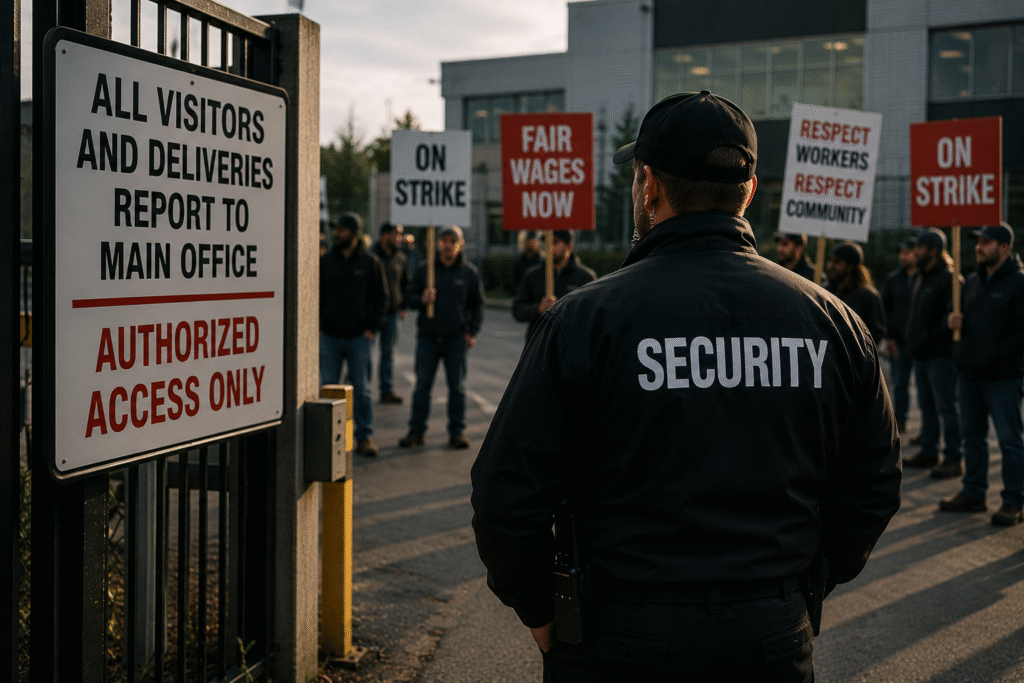
Labour dispute mistakes can create unnecessary risk during a strike, lockout or picket line.
When a labour dispute becomes active, employers need to make fast decisions about access, staffing, suppliers, contractors, communication, evidence and security. Without a plan, those decisions can become reactive.
That is where problems begin.
A labour dispute is not the time to build a response from scratch. Employers that wait too long, focus only on the gate, lack a command structure, collect weak evidence or hire the wrong security provider may lose control before the dispute fully develops.
The goal is not to escalate conflict. The goal is to reduce risk, protect operations and prepare before job action begins.
Labour Dispute Mistakes Often Start With Late Planning
One of the most common labour dispute mistakes is waiting too long to plan.
Many employers start preparing when strike notice arrives. By that point, they may already be behind. A strong pre-strike contingency plan should begin much earlier, especially if a collective agreement is expiring or bargaining is becoming difficult.
Late planning can affect staffing, supply chains, contractors, customers, access points and decision-making. It can also force employers into rushed decisions when they should be working from a prepared plan.
Planning ahead gives employers more options. It also gives management, legal counsel and security time to align before pressure increases.
Gate-Only Thinking Can Create Blind Spots
When planning starts late, employers often focus only on the most visible issue: the front gate.
Employers may focus on the front gate because it is the most visible part of a labour dispute. However, the gate is rarely the only pressure point.
Employers should also consider supply routes, contractor access, customer movement, staff travel, management safety and off-site activity. Secondary picketing, social media pressure and supplier disruption can all affect operations.
If the employer only prepares for one gate, it may miss activity happening elsewhere.
A stronger plan looks at the full operating environment, including access routes, outside partners and any locations where labour pressure could affect continuity.
A Labour Dispute Can Come From No Command Structure
As the response becomes more complex, employers need a clear command structure to keep decisions aligned.
During a labour dispute, supervisors, managers, operations leaders, security personnel and external partners may all try to solve immediate problems. However, without clear authority, decisions can become inconsistent.
Mixed messages to suppliers, customers, employees or strike security can weaken the employer’s strategy. Conflicting instructions can also slow escalation and create confusion when the organization needs clarity.
Employers should decide in advance who has authority, who communicates instructions, who approves changes and who escalates issues to legal counsel or senior leadership.
A clear command structure helps keep the response aligned.
Weak Evidence Can Limit Employer Options
Even with a clear command structure, employers still need reliable evidence to support decisions made during the dispute.
Evidence may matter for legal counsel, police, injunctions, internal decision-making and future claims. It can help explain what happened, who was involved, how access was affected and whether conduct created safety or operational concerns.
Poor evidence creates problems. Missing timestamps, unclear video, weak context, incomplete reports or scattered files can make it harder to prove what happened.
Employers should collect evidence consistently. Reports should include dates, times, locations, people involved, vehicle details, operational impact and any response taken by security or management.
The goal is not to exaggerate the dispute. The goal is to create a clear, factual record.
Source: Canada Evidence Act – Business Records
General Security Is Not the Same as Strike Security
The quality of the employer’s response often depends on whether the security provider understands strike and lockout environments.
Hiring a security company is not the same as hiring a strike security provider. A labour dispute is a specialized environment, and security personnel need to understand picket line management, evidence collection, de-escalation, access control, legal sensitivity and the employer’s overall strategy.
A general security company may be effective in normal operations but unprepared for a strike or lockout. Without proper experience, guards may miss important evidence, escalate tension, misunderstand their role or act outside the employer’s plan.
Strike security should reduce risk, not create another problem for management to solve.
Employers Should Reduce Risk Before the Dispute Begins
These mistakes are connected.
Late planning can lead to gate-only thinking. Gate-only thinking can miss off-site risks. A weak command structure can create inconsistent decisions. Poor evidence can limit legal options. The wrong security provider can make every one of those problems worse.
That is why employers should prepare before job action begins.
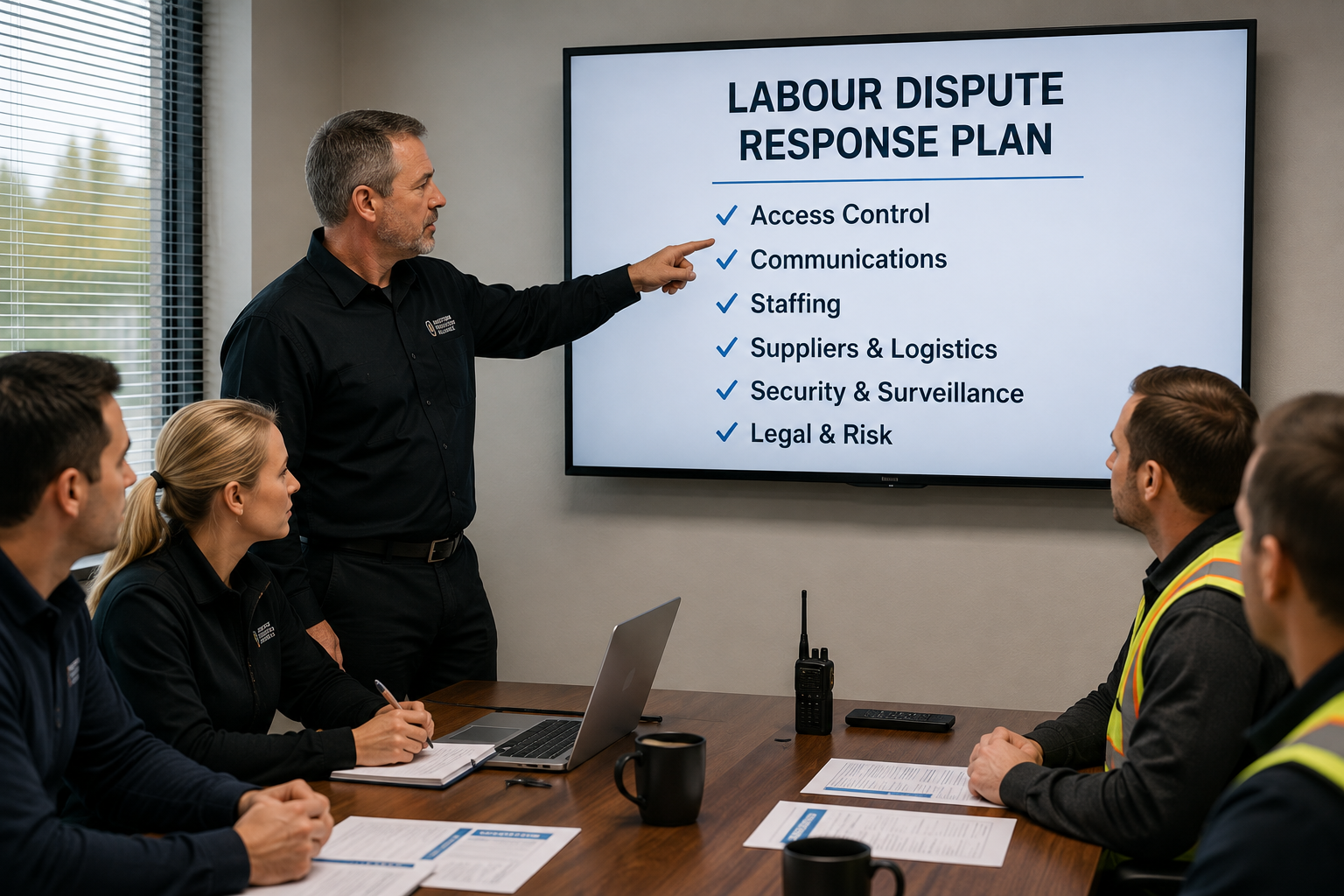
A practical plan should identify access risks, build a command structure, define communication protocols, establish evidence procedures and confirm whether the security provider has real strike and lockout experience.
For mining, construction, transportation, manufacturing, municipal and industrial employers, this planning may involve picket line access, supplier movement, contractor coordination, executive protection, site security, documentation and labour dispute security.
Avoiding Labour Dispute Mistakes Protects Employer Options
Labour disputes can move quickly once job action begins, and employers that are unprepared may have fewer options.
When employers wait too long, focus only on the gate, lack clear authority, collect weak evidence or hire the wrong security provider, they create avoidable risk.
A stronger response starts before the dispute becomes active. Employers should plan early, communicate clearly, document properly and work with a security provider that understands strikes, lockouts and picket line dynamics.
At Western Protection Alliance, we help employers prepare for labour disputes before they become operational disruptions. Our work includes contingency planning, labour dispute security, secure site access, supervisor coordination, picket line access and objective incident documentation.
The best outcome is always a resolved agreement. However, responsible employers prepare before the first picket line appears.
Sources:
- Canada Evidence Act – Business Records, Section 30
https://laws-lois.justice.gc.ca/eng/acts/c-5/section-30.html - Western Protection Alliance – The First 72 Hours of a Labour Disruption https://www.westernalliance.ca/the-first-72-hours-of-a-labour-disruption/
- Western Protection Alliance – Secondary Picketing: What Employers Need to Know https://www.westernalliance.ca/secondary-picketing-employers/
- Western Protection Alliance – Picket Line Access: How Employers Keep Sites Moving https://www.westernalliance.ca/picket-line-access-employers/
- Western Protection Alliance – 5 Labour Dispute Mistakes That Cost Employers Control https://youtu.be/g0d_zt8RFfs?si=tG9vZosrlF4hyh7d