
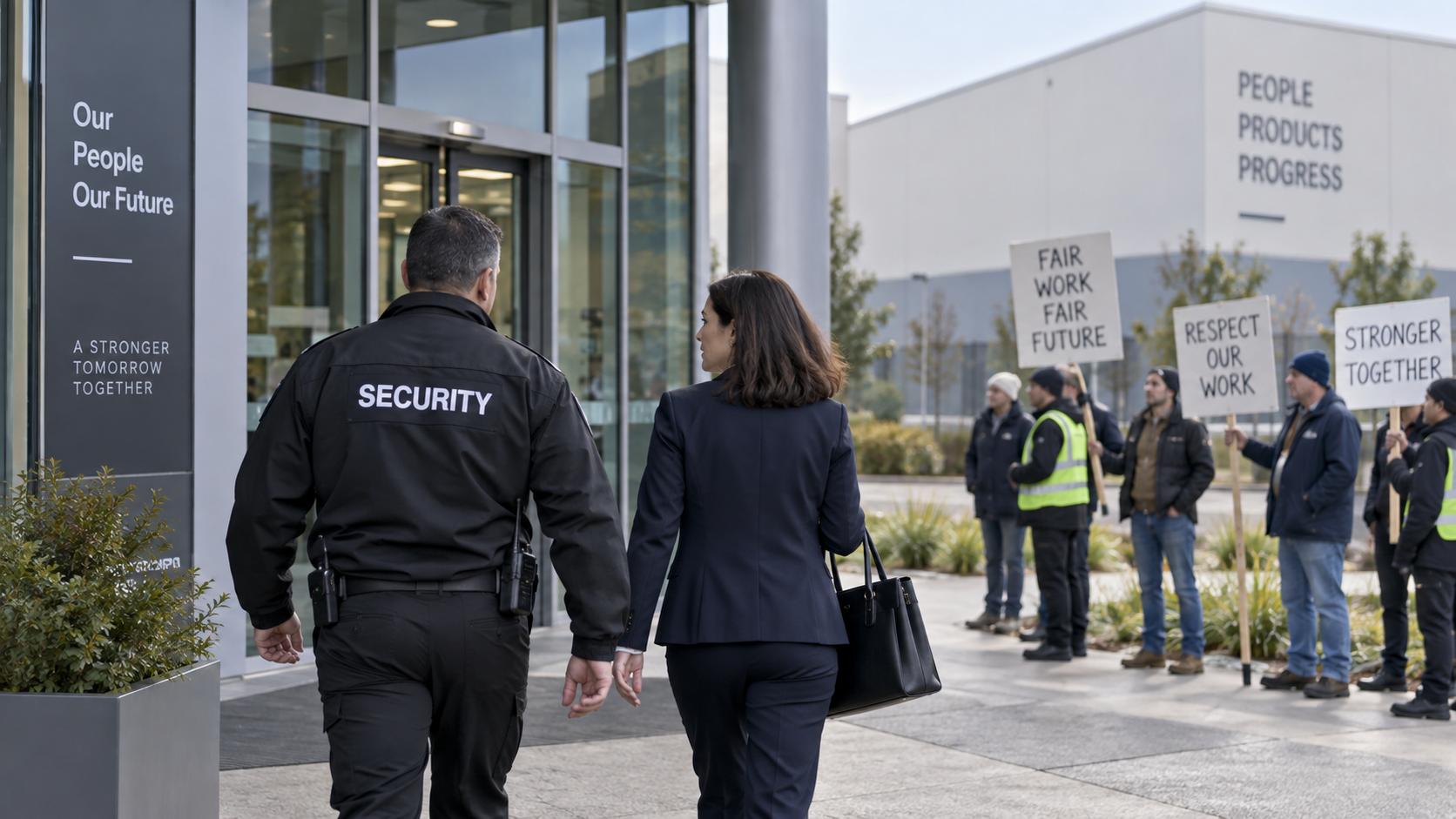
Protecting managers during a labour dispute should be part of every employer’s strike or lockout planning. Employers often focus on picket lines, facility access, negotiations and business continuity. But managers, supervisors, executives and members of the management bargaining team can quickly become pressure points during a dispute.
Managers, supervisors, executives and members of the management bargaining team can quickly become pressure points during a dispute. They may need to cross picket lines, maintain operations or make decisions that place them in a highly visible position.
As Western Protection Alliance founder Rob Reeleder explains, most managers were not hired to work in a labour dispute environment. A strike or lockout can expose them to a very different level of stress and potential confrontation.
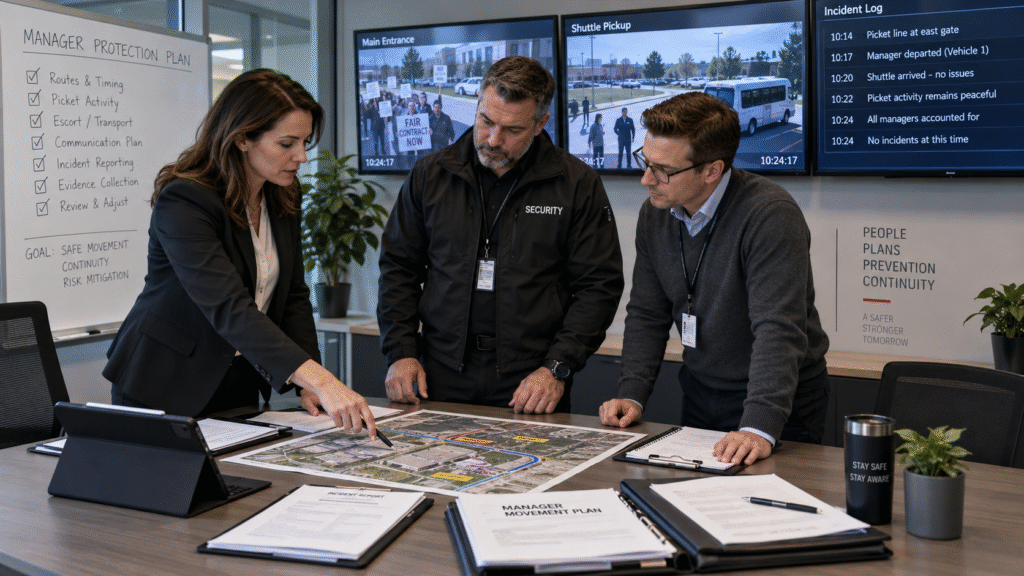
Protecting Managers During a Labour Dispute Starts With Identifying Risk
Not every manager faces the same level of exposure.
Frontline supervisors may be vulnerable because of their daily relationships with unionized employees. Members of the management bargaining team can also become highly visible because of their role in negotiations.
Employers should consider which individuals may face increased risk, including:
- Senior executives
- Frontline supervisors
- Human resources personnel
- Members of the management bargaining team
- Managers regularly crossing a picket line
The objective is to understand where each person sits within the overall threat environment and provide protection that reflects the actual risk.
Workplace safety requirements vary across Canada. In British Columbia, for example, WorkSafeBC requires employers to assess identified risks of workplace violence and establish procedures, policies and workplace arrangements to eliminate or minimize those risks.
Source: WorkSafeBC – Violence in the Workplace
Pressure Can Move Beyond the Picket Line
One of Rob’s key points is that pressure is personal.
Strike-related pressure does not necessarily remain at the main workplace. Over more than 30 years of labour dispute work, Western Protection Alliance has encountered activity at hotels, parking areas, residences, places of worship and even children’s sporting events. Managers can also encounter harassment through social media or other online channels.
Employers should therefore have a clear process for reporting and documenting concerning incidents, including those occurring away from the main facility.
In B.C., the Labour Relations Code specifically regulates picketing, including where lawful picketing may occur. Other provinces and federally regulated workplaces operate under their own labour relations frameworks, which is why employers should involve qualified labour counsel when questions arise about picketing or related conduct.
Source: Government of British Columbia – Labour Relations Code
Movement Planning Helps Protect Managers During a Labour Dispute
During normal operations, how managers travel to and from work may not require significant employer involvement.
During a labour dispute, that can change.
If managers are being asked to cross an active picket line, employers should consider how they will safely arrive, leave, park and move between locations.
Potential flash points can include:
- Picket-line crossings
- Parking areas
- Hotel arrivals
- Shuttle pickup points
- Routes between accommodations and facilities
Hotels can also become part of the security plan. Controlled entrances, card-key access, secure parking and coordinated transportation can help reduce unnecessary exposure.
Executive Protection for Managers During a Labour Dispute
Executive protection during a labour dispute does not necessarily mean providing close personal protection to every manager.
It begins with a risk assessment.
Depending on the circumstances, protective measures may include secure transportation, planned picket-line crossings, hotel security protocols, residential checks, security escorts or close protection for individuals facing a higher threat level.
In serious situations, concerns involving family members may also need to be considered. WorkSafeBC guidance notes that a threat against a worker’s family resulting from the worker’s employment can be considered a threat against the worker for the purposes of its workplace-violence provisions.
Source: WorkSafeBC – OHS Policies, Violence in the Workplace
The important point is that protection should be proportionate to the identified risk.
Document Concerning Conduct
Evidence collection is another important part of protecting managers.
Ontario provides a useful example of how labour legislation can address misconduct associated with a dispute. Section 78 of Ontario’s Labour Relations Act, 1995 addresses strike-related misconduct, including conduct involving intimidation, coercion, undue influence, provocation, infiltration and surveillance in specified circumstances.
Source: Government of Ontario – Labour Relations Act, 1995
The specific legal framework will vary by jurisdiction, but the operational lesson for employers is straightforward: document concerning conduct properly and involve labour counsel when necessary.
Useful evidence can include:
- Dates and times
- Exact locations
- Incident reports
- Photographs or video
- Vehicle information
- GPS records
- Dash-camera footage
At Western Protection Alliance, GPS tracking and vehicle dash cameras are examples of tools that can help establish where an incident occurred and provide objective evidence when managers report harassment, following or other concerning behaviour.
That evidence can also assist corporate leadership, labour counsel, security personnel and police when further action is required.
Workplace Violence Planning Is an Employer Issue
Manager protection should not be viewed solely as a security issue.
For federally regulated employers, Canada’s workplace harassment and violence framework includes requirements involving workplace assessments, preventative measures, emergency procedures, training and processes for addressing occurrences.
The Canadian Human Rights Commission also provides guidance on preventing and addressing workplace harassment and violence.
Provincial requirements differ, but the broader principle remains important: employers should assess foreseeable risks and establish procedures before personnel are exposed to them.
Protect the People Keeping the Business Running
Labour disputes are dynamic.
If activity becomes restricted at a primary picket line, pressure may shift to other locations or toward managers perceived as important to the employer’s operations or negotiating strategy.
That is why a protection plan should be reviewed as the dispute develops.
Protecting managers during a labour dispute is not about assuming that every strike will become dangerous. It is about identifying vulnerabilities, planning safe movement, documenting incidents and increasing protection when the circumstances justify it.
As Rob emphasizes, managers were hired to perform their professional roles. They were not hired to face the unique pressures of a labour dispute without support.
Preparing for a Labour Dispute?
Western Protection Alliance supports employers across Canada with labour dispute security, executive protection, evidence collection, access control and strike preparedness.
Learn more about our Labour Dispute Response Services or contact Western Protection Alliance for a free 20-minute consultation.
For urgent labour dispute planning, we offer a 12-hour callback commitment.
Sources
- WorkSafeBC – Violence in the Workplace
- WorkSafeBC – OHS Policies, Violence in the Workplace
- Government of British Columbia – Labour Relations Code
- Government of Ontario – Labour Relations Act, 1995
- Canadian Human Rights Commission – Preventing and Addressing Workplace Harassment and Violence
- Western Protection Alliance – Picket Line Access