
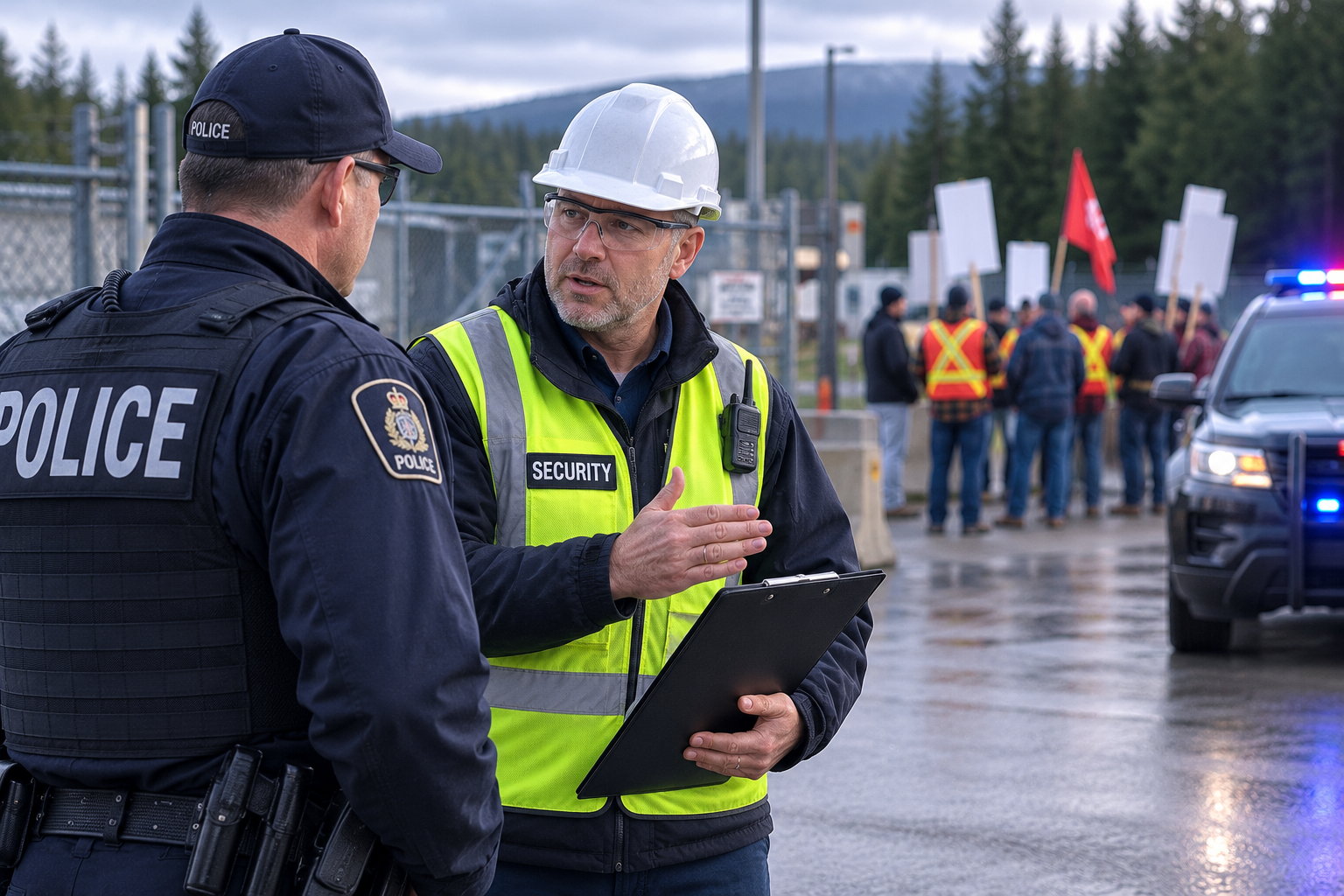
Police injunctions and picket lines require early planning before a labour dispute becomes active.
When a strike, lockout or picket line becomes active, employers may need to manage police communication, legal strategy, evidence collection and security conduct at the same time. If those pieces are not prepared in advance, the response can become rushed and inconsistent.
Early preparation helps the employer explain facts clearly, support legal counsel, reduce unnecessary escalation and protect operational continuity.
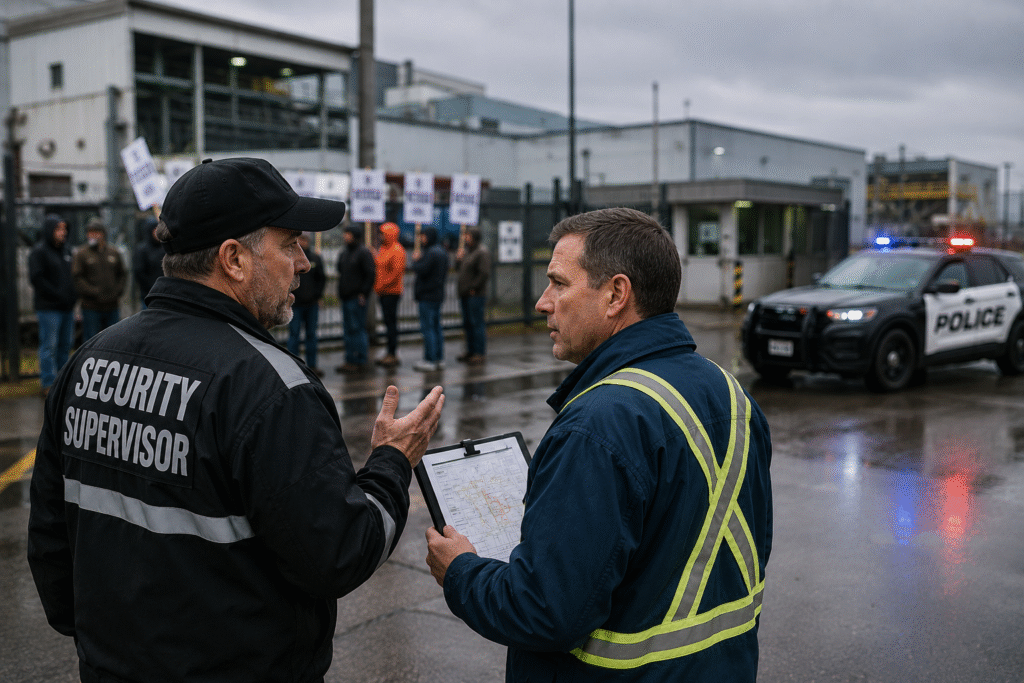
Police Injunctions and Picket Lines Need Clear Liaison Roles
A labour dispute response should include one clear police liaison.
This should usually be someone internal who can communicate with the local police service, share accurate information and avoid unnecessary escalation. The employer should also understand who the police point of contact may be if picketing begins.
A police liaison helps keep communication professional. That person should not call police for every minor issue. Instead, they should provide clear facts when serious incidents, safety concerns or unlawful conduct arise.
Injunction Readiness Should Be Part of the Strike Plan
Employers should think about injunction readiness before the dispute becomes active.
Injunctive relief may become important if picketing blocks access, creates safety issues, interferes with operations or exceeds lawful limits. However, an injunction strategy needs legal counsel, strong evidence and a clear understanding of what is happening on the ground.
Employers should meet with labour counsel before job action begins. That discussion should identify the evidence counsel will need, the process for documenting incidents and the point when legal escalation may be needed.
Source: BC Labour Relations Board – Strikes, Lockouts, Picketing, and Replacement Workers
Police Injunctions and Picket Lines Depend on Strong Evidence
Evidence collection needs discipline during a labour dispute.
Employers should collect incident logs, timestamps, photographs, video, witness notes and access records in a consistent way. Each record should explain what happened, when it happened, where it happened, who was involved and how the incident affected operations.
Video should also include context. A short clip may show part of an incident, but it may not explain what happened before or after.
Good evidence does not happen by accident. It requires clear procedures before the dispute begins.
Source: Canada Evidence Act – Business Records
Security Restraint Reduces Picket Line Risk
Security conduct can affect the entire dispute.
Strike security personnel should remain professional, neutral and restrained. They should not argue with picketers, escalate tension or act outside the employer’s plan.
Their role is to support safe access, document incidents, gather evidence and communicate through the proper channels.
A tense picket line can become more volatile if security personnel are poorly trained or confrontational. That is why labour dispute experience matters.
Police, Legal Counsel and Security Must Stay Aligned
Employers need police communication, injunction readiness, evidence collection and security restraint to work together before pressure builds.
When the team lacks accurate facts, clear evidence or security restraint, the employer may face unclear police communication, weaker injunction options and new operational risks.
The employer’s strike command centre should keep these functions aligned. The police liaison, legal counsel, operations lead and strike security provider should understand how information moves, when issues escalate and who has authority to make decisions.
Early Preparation Protects Employer Options
Police, injunctions and picket lines require planning before the dispute becomes active.
Employers should identify the police liaison, meet with labour counsel, define evidence procedures and confirm the role of strike security before job action begins.
At Western Protection Alliance, we help employers prepare for labour disputes before they become operational disruptions. Our work includes contingency planning, labour dispute security, secure site access, police liaison support, supervisor coordination, picket line access, evidence collection and strike command support.
The best outcome is always a resolved agreement. However, responsible employers prepare before the first picket line incident occurs.
Sources:
- BC Labour Relations Board – Strikes, Lockouts, Picketing, and Replacement Workers
https://www.lrb.bc.ca/strikes-lockouts-picketing-and-replacement-workers - Canada Evidence Act – Business Records https://laws-lois.justice.gc.ca/eng/acts/c-5/section-30.html
- Western Protection Alliance – What Labour Lawyers Need From Strike Security https://www.westernalliance.ca/labour-lawyers-strike-security/
- Western Protection Alliance – How to Choose a Strike Security Company https://www.westernalliance.ca/strike-security-company/
- Western Protection Alliance – Police, Injunctions, and Picket Lines: What Employers Should Prepare Early https://youtu.be/tdJ3_z1E7Vk?si=7bmvHfc22XluCE-T