

Independent mine security can provide something an in-house security team may find harder to maintain over time: separation, objectivity, and an additional layer of oversight.
That distinction matters at precious metal mines where employees, contractors, supervisors, and security personnel may work together in the same remote environment for years.
In the Association of Certified Fraud Examiners’ 2024 global occupational fraud study, mining had the highest median loss among the industries represented, at US$550,000 per case. The mining category included 24 cases in the study, so the figure should not be interpreted as a Canada-specific loss rate.
For mine operators, the finding still reinforces an important point: weak controls in a high-value environment can become expensive very quickly.
Source: Association of Certified Fraud Examiners – Occupational Fraud 2024: A Report to the Nations
1. Familiarity Can Create Security Blind Spots
In-house security has an obvious advantage. Personnel know the site.
Over time, that familiarity can also create blind spots.
Remote mine camps often develop strong working relationships. Employees, contractors, supervisors, and security personnel may work together, eat together, travel together, and follow the same routines for long periods.
That familiarity does not mean anyone is acting improperly. The risk is that routine can gradually soften controls.
A familiar vehicle may receive less scrutiny. A contractor who enters every day may not be checked as closely. Patrol patterns can become predictable. Security personnel may also become less comfortable challenging people they work with regularly.
Independent security creates more separation between the people enforcing the security program and the organization being monitored.
That separation can make it easier to apply procedures consistently and question unusual activity without the same internal relationships or site politics.
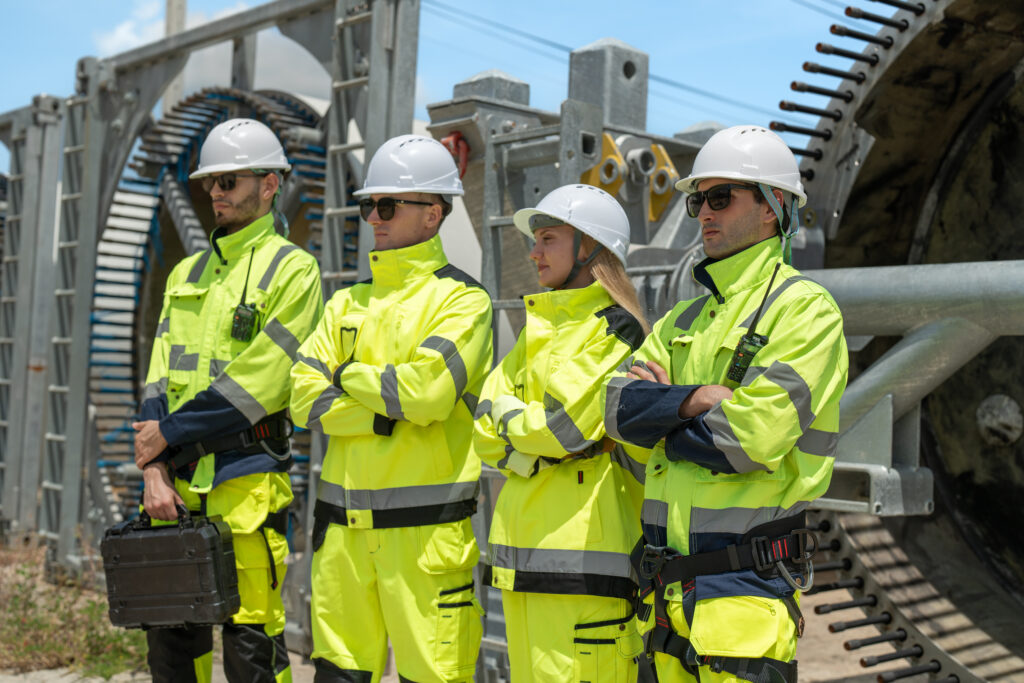
2. Independent Security Adds Another Layer of Oversight
Oversight matters because fraud and security failures are often connected to control weaknesses.
The ACFE found that 32% of occupational fraud cases involved a lack of internal controls, while another 19% involved the override of existing controls. Together, those two weaknesses accounted for more than half of the cases studied.
Independent security does not eliminate fraud, and the ACFE research does not specifically compare contract security with in-house security.
However, a third-party provider can add another control layer through separate supervision, defined post orders, documented incident reporting, and independent escalation procedures.
That structure can make it harder for informal practices to replace established security requirements.
Source: Association of Certified Fraud Examiners – Occupational Fraud 2024: A Report to the Nations
3. Independence Can Strengthen Objectivity
The value of independence is well established in corporate governance and assurance.
The Institute of Internal Auditors’ Three Lines Model explains that independence allows assurance functions to provide greater objectivity and confidence when evaluating governance, risk management, and internal controls.
Security is not internal audit, but the same structural principle is relevant.
When security personnel report through a separate organization, they may have greater distance from the departments, supervisors, or individuals involved in an incident.
That can support more objective reporting, clearer escalation, and a stronger audit trail.
Independent security personnel still need proper training, supervision, and quality control. Being a third party does not automatically make a security program effective.
The advantage is the additional separation.
Source: The Institute of Internal Auditors – The Three Lines Model
4. Precious Metal Mines Require Strong Controls
Precious metals create a different security environment than many other mine-site assets.
High-value product can move through restricted areas, processing facilities, gold rooms, storage locations, and transportation systems before leaving the operation.
Security may need to support access verification, CCTV monitoring, personnel and vehicle screening, transportation procedures, restricted-area controls, and chain-of-custody records.
The World Gold Council’s Responsible Gold Mining Principles also emphasize governance, risk management, responsible supplier practices, and independent assurance. Companies implementing the principles are required to obtain assurance from an independent third party.
That requirement relates to responsible gold mining as a whole rather than mine-site security specifically, but it demonstrates the value the gold industry places on independent verification and oversight.
Source: World Gold Council – Responsible Gold Mining Principles
Western Protection Alliance’s mine security staffing services include access management, gold room security, CCTV monitoring, chain-of-custody logging, vehicle and personnel screening, and incident reporting.
5. Personnel Rotation Can Reduce Predictability
Continuity is valuable in mine security. Experienced personnel understand the operation, the environment, and the site’s procedures.
Too much routine can create a different problem.
When the same people perform the same duties in exactly the same way for long periods, relationships and patterns can become entrenched.
A professionally managed independent security program can balance continuity with controlled rotation, supervisory reviews, and periodic changes in patrol or inspection routines.
The goal is not constant staff turnover.
It is to prevent familiarity from becoming complacency and to give the security program opportunities to identify weaknesses that may no longer be obvious to long-term personnel.
Independent Security Can Improve Reporting and Accountability
Security records need to be factual, consistent, and properly escalated.
An independent provider operates through its own supervisory structure and contractual responsibilities. That can create clearer separation when security personnel need to report a policy violation, challenge access, or document an incident involving someone within the operation.
This is particularly important when security personnel have access to sensitive information such as patrol schedules, restricted areas, camera locations, contractor movements, or precious-metal handling procedures.
Mine operators should still evaluate the quality of the provider itself. Independence only adds value when the security company has proper supervision, experienced personnel, strong reporting procedures, and clear accountability.
For operators comparing the two models, our article on in-house or contract security for Canadian mines looks at the broader operational differences.
Why Independent Security Matters at Precious Metal Mines
Independent security is not automatically better simply because it is outsourced.
The value comes from what independence can add to the security structure: separation of duties, objective reporting, independent supervision, controlled personnel rotation, and another layer of oversight.
At precious metal mines, those controls can be particularly important because relatively small quantities of material can carry significant value.
At Western Protection Alliance, mine security programs are designed around the realities of Canadian exploration, construction, and production environments. That includes access control, restricted-area security, patrols, incident reporting, supervision, chain-of-custody procedures, and personnel who understand remote mine operations.
In-house security may know the site extremely well.
The question for mine operators is whether familiarity alone provides enough separation and oversight for an operation protecting high-value precious metals.
Sources
- Association of Certified Fraud Examiners – Occupational Fraud 2024: A Report to the Nations
- The Institute of Internal Auditors – The Three Lines Model
- World Gold Council – Responsible Gold Mining Principles
- Western Protection Alliance – Security Staffing
- Western Protection Alliance – In-House or Contract Security: What Canadian Mines Need to Know