
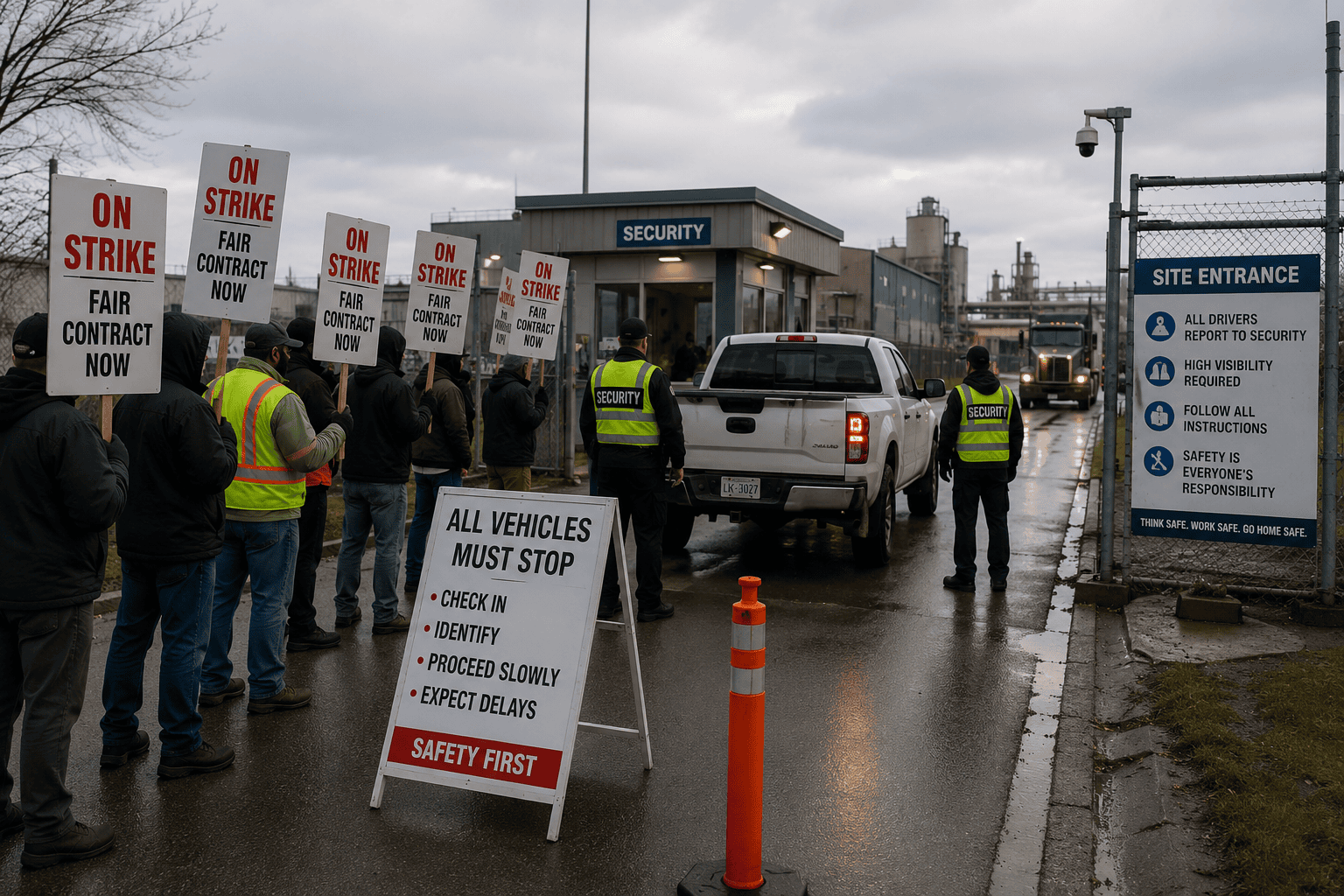
Picket line access can determine how much control an employer keeps during a strike or lockout.
When a picket line forms, the issue is not only whether people are protesting. The issue is whether employees, contractors, suppliers, customers, emergency responders and critical vehicles can move safely and lawfully through the site.
Employers that plan picket line access early are usually in a stronger position. They know which entrances matter, who needs to cross, what evidence must be gathered and when police or legal counsel may need accurate information.
In a labour dispute, movement matters.
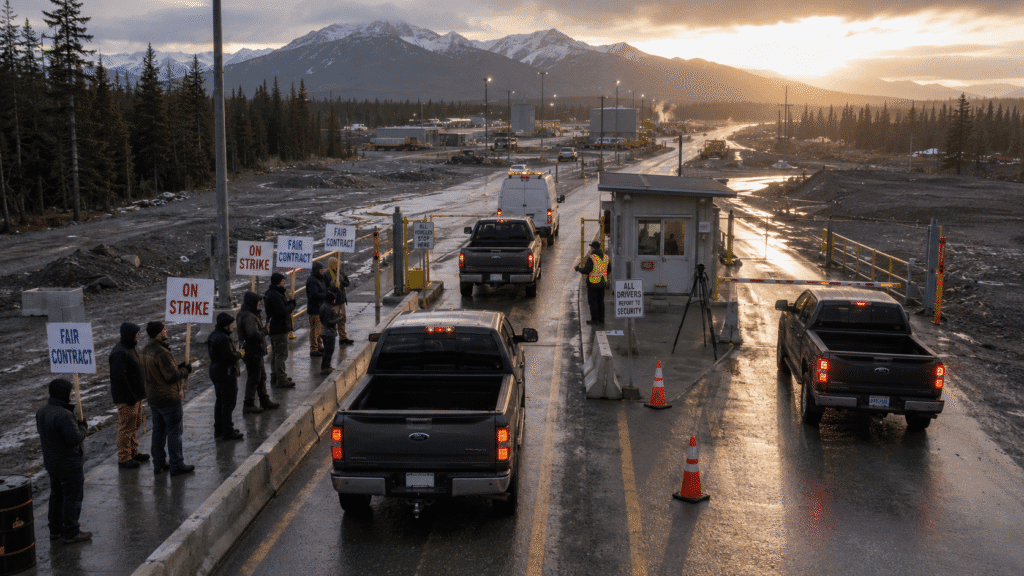
Picket Line Access Should Be Planned Early
Employers should plan picket line access before the picket line forms.
The plan should identify main gates, contractor entrances, supplier access points, customer pickup or delivery areas, staff parking, emergency routes and secondary entrances.
The plan should identify who needs access, crossing frequency, approved routes and who will communicate instructions to employees, contractors and suppliers.
This plan should be in writing before the dispute begins. It does not need to be public, but it should give management, security and legal counsel a shared understanding of how the company intends to maintain lawful access.
Source: BC Labour Relations Board – Strikes, Lockouts, Picketing, and Replacement Workers
Why Picket Line Access Makes the Gate a Pressure Point
The gate is often where the labour dispute becomes visible.
Employees on strike may gather there. Management may need to cross. Contractors, suppliers, customers, security personnel and sometimes police may all interact in the same area.
That makes the gate a pressure point for delay, confusion, confrontation and evidence collection.
Employers should treat the gate as a controlled access point, not just a physical entrance. Security should know where to stand, what to observe, when to report and how to avoid inflaming the situation.
When the gate becomes disorganized, the dispute becomes harder to manage.
Document Every Picket Line Access Attempt
The employer should record every access attempt clearly and consistently.
The employer should record the date, time, location, people involved, vehicles involved, weather conditions, delays and actions taken by each party. Video can be useful because it captures movement, timing and interaction, but video alone is not enough.
The person operating the camera may later need to explain what happened, prepare an affidavit or provide evidence. That is why documentation should be clear, professional and consistent.
Employers should preserve video, photographs, access logs, incident reports, supervisor notes and communication records.
Source: Canada Evidence Act – Business Records
Evidence Can Support Legal Strategy
Employers need evidence collection built into every picket line access plan.
If picketers delay vehicles, block entrances, threaten staff, interfere with suppliers or create safety concerns, the employer may need evidence to support legal counsel, police communication or a request for injunctive relief.
Poor notes, missing timestamps, unclear video or inconsistent reporting can weaken the employer’s position. Proper documentation can help show patterns, delays, access problems and the effect of picketing on the operation.
Employers should decide how evidence will be collected before the first access issue occurs.
Source: Canada Evidence Act – Business Records
Define Roles Before the Dispute Escalates
Picket line access requires clear roles.
Security should know its responsibilities for observation, documentation, access support, incident reporting and communication. Management should know who speaks to employees, suppliers, customers and contractors. Legal counsel should know who provides evidence and when updates will be delivered.
The company should also decide who contacts police if a situation requires police involvement.
This decision should not be made in the middle of a confrontation. Clear roles help prevent overreaction and reduce poorly supported police calls.
Source: Toronto Police Service – Labour Disputes
Police Keep the Peace, but Employers Need a Plan
Employers should not assume police will manage picket line access for the company.
Police may attend when safety, threats, property damage or blocked access become concerns. However, the employer still needs its own access plan, communication process and evidence procedures.
The company should explain the incident, identify the people involved, confirm the delay length, present available evidence and clearly state what outcome it needs.
Source: Toronto Police Service – Labour Disputes
Use Qualified Strike Security for Picket Line Access
Not every guard company understands how to manage picket line access.
Labour disputes require security personnel who understand strike protocol, access control, evidence gathering, incident reporting, de-escalation and police communication.
Qualified strike security should support the employer’s broader strategy. That includes helping preserve access, documenting incidents, supporting lawful movement and providing reliable information to management, legal counsel and police when required.
The wrong security approach can create confusion. The right approach can help the employer stay organized and in control.
Picket Line Access Protects Business Continuity
Picket line access is not only about getting through the gate.
It helps employers protect people, move product, support suppliers, maintain customer obligations and gather the information needed to make better decisions. Even when operations slow down, controlled access can help the employer maintain options.
At Western Protection Alliance, labour dispute security is not just about placing personnel at a gate. It is about helping employers maintain lawful access, gather usable evidence, communicate clearly and protect operational continuity during a high-risk period.
Employers should plan picket line access before the dispute begins. Once the picket line forms, every access attempt, delay, report and communication decision can affect the company’s ability to stay in control.
Sources
- BC Labour Relations Board – Strikes, Lockouts, Picketing, and Replacement Workers
https://www.lrb.bc.ca/strikes-lockouts-picketing-and-replacement-workers - Canada Evidence Act – Business Records
https://laws-lois.justice.gc.ca/eng/acts/c-5/section-30.html - Toronto Police Service – Labour Disputes
https://www.tps.ca/demonstrations/labour-disputes/ - Western Protection Alliance – Picket Line Access Control: Protecting Operations During a Labour Dispute
https://youtu.be/ldmPyPASMpo?si=mfvmreb6S96pMXwl