
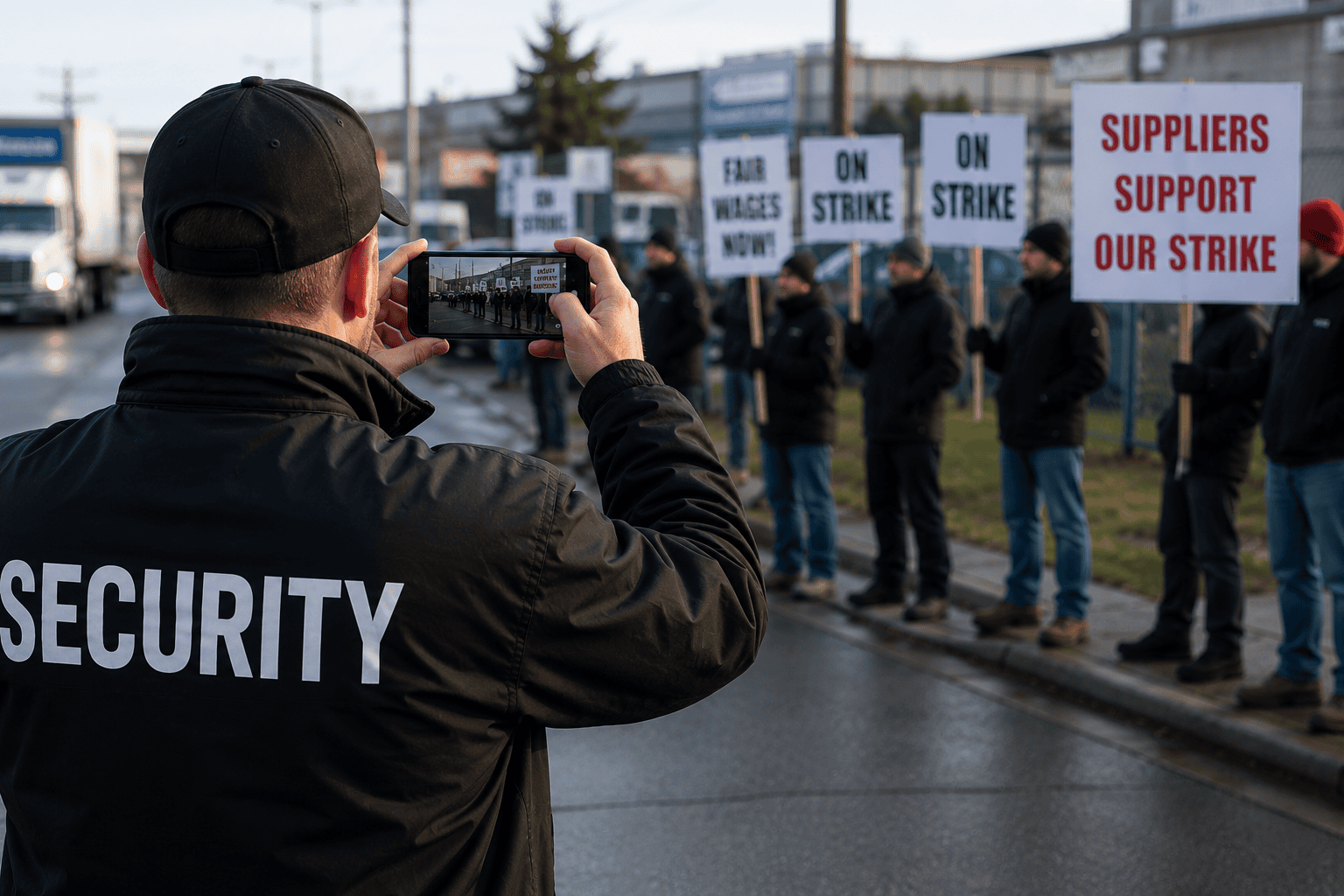
Secondary picketing can change the shape of a labour dispute.
For employers, the risk is not limited to the front gate. Picketing may also affect suppliers, contractors, customers, transportation routes, hotels, shuttle stops, restaurants and other locations connected to the employer’s operations.
That means employers need to think beyond the main picket line.
A labour dispute plan should address where pressure may appear, who may become a target, how people and goods will move, how suppliers will communicate and how off-site incidents will be documented.
Secondary picketing is not a side issue. It can become a primary operational risk.
What Is Secondary Picketing?
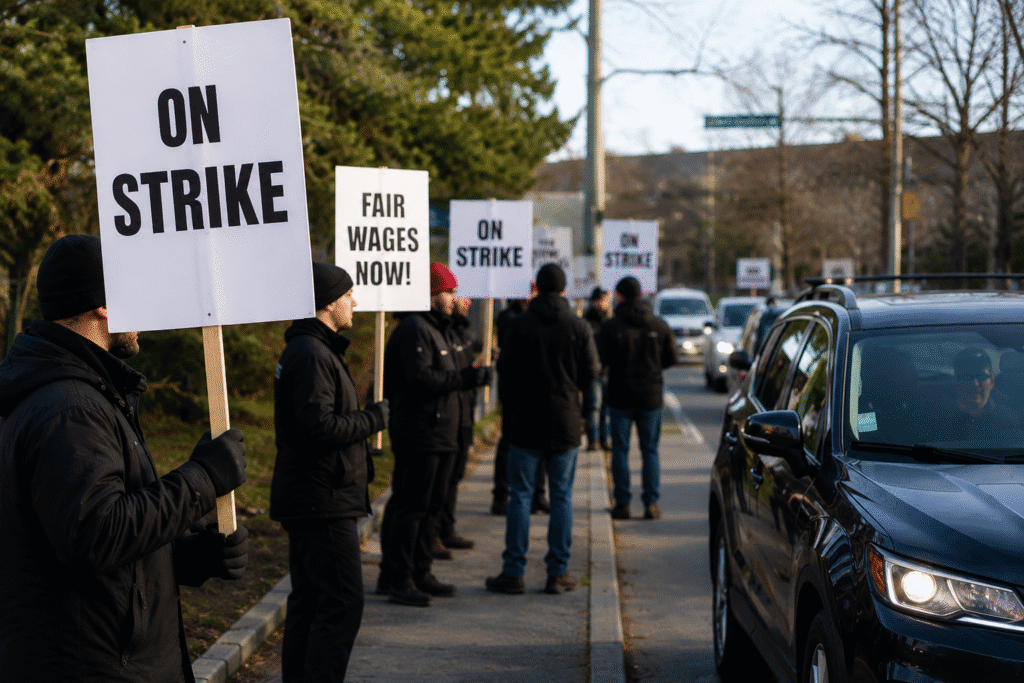
Secondary picketing, often called off-site picketing, involves picketing away from the employer’s main workplace or primary picket line.
In Canada, the Supreme Court of Canada’s 2002 Pepsi-Cola decision changed how employers needed to think about this issue. The Court rejected a blanket ban on secondary picketing and held that secondary picketing is generally lawful unless it involves wrongful conduct, such as tortious or criminal activity.
For employers, this means pressure may not stay at the gate. It can affect suppliers, contractors, customers, managers, replacement workers, delivery routes and other connected locations.
Source: Supreme Court of Canada – R.W.D.S.U., Local 558 v. Pepsi-Cola Canada Beverages (West) Ltd.
Source: BC Labour Relations Board – Strikes, Lockouts, Picketing, and Replacement Workers
Why Secondary Picketing Is Not a Side Issue
Off-site picketing should be part of the employer’s labour dispute plan.
The gate still matters, and employers should still plan for picket line access, but it is not the only pressure point. Employers also need to consider the supply chain, contractor routes, customer locations, supplier facilities and other places where labour pressure may appear.
That requires coordination between operations, security, management and legal counsel.
If the employer only plans for the main gate, it may miss critical activity happening elsewhere.
Pressure Follows People, Not Just Property
During a labour dispute, pressure often follows the people connected to the operation.
Managers, executives, supervisors, contractors, suppliers and replacement workers may all become focal points for off-site picketing or protest activity. Even if the workplace gate remains controlled, disruption can appear along travel routes, at hotels, at shuttle locations, at restaurants or near supplier and customer sites.
The plan must account for movement, not just property.
Employers should review travel routes, parking areas, staff movement, executive movement, contractor arrivals and replacement worker logistics before job action begins.
Suppliers and Contractors Need a Plan
Suppliers and contractors can feel pressure before they ever reach the main picket line.
They may receive calls, messages, social media attention, off-site picketing or pressure at their own facilities. Some may turn around before arriving. Others may delay deliveries, change schedules or ask for clearer instructions before continuing.
Employers should not leave suppliers and contractors to figure this out on their own.
A labour dispute plan should include supplier communication, delivery routing, escalation contacts, security protocols and instructions for what to do if a driver, contractor or vendor encounters picketing away from the main site.
Suppliers and contractors are often part of the employer’s operational resilience during a dispute. They should be treated as part of the plan.
Social Media Can Become a Second Picket Line
Secondary picketing is no longer limited to physical locations.
Social media can quickly become another pressure point during a labour dispute. Posts, photographs, videos, rumours and calls for pop-up protest activity can affect employees, suppliers, contractors, customers and public perception.
One post can create operational pressure. It can also attract people who are not directly part of the bargaining unit, including supporters, family members, activists or other groups.
A labour dispute communication plan should include social media monitoring, screenshot preservation, response protocols and clear rules about who is allowed to respond publicly.
Employers should avoid online arguments. Instead, they should document relevant activity, preserve evidence and communicate through approved channels.
Document Every Off-Site Incident
Documentation matters when picketing moves away from the main gate.
Employers should record off-site picketing, supplier delays, route disruptions, social media posts, contractor concerns, access issues and any threats or unsafe behaviour.
That documentation may include screenshots, photographs, video, incident reports, access logs, delay logs, witness notes and communications from suppliers or contractors.
The details matter. The employer should record what happened, where it happened, when it happened, who was involved and how it affected operations.
Without documentation, off-site activity may remain invisible to legal counsel and decision-makers.
What Employers Should Prepare Before Job Action
Employers should prepare for secondary picketing before job action begins.
The plan should identify likely off-site pressure points, including supplier locations, contractor routes, customer sites, parking lots, transportation hubs, hotels, shuttle stops and executive travel patterns.
It should also identify who monitors off-site activity, who communicates with suppliers, who contacts legal counsel, who documents incidents and who escalates safety concerns.
For mining, construction, industrial and municipal employers, this planning may include site access, shift changes, contractor arrivals, product movement, transport teams, replacement worker logistics, executive protection, picket line access and evidence collection.
This should fit within the employer’s broader strike strategy. The goal is to maintain lawful operations while reducing confusion and unnecessary risk.
Secondary Picketing Requires a Wide Labour Dispute Plan
Secondary picketing can expand a labour dispute beyond the main gate.
Employers that only prepare for the front entrance may miss the real pressure points. Suppliers, contractors, customers, managers, replacement workers, transportation routes and social media can all become part of the dispute.
Labour disputes are rarely controlled by one location anymore. Employers need a broader plan that accounts for access, movement, communication, documentation and off-site risk.
At Western Protection Alliance, we help employers prepare for labour disputes before they become operational disruptions, including strike planning, secondary picketing response, picket line access, evidence collection, supervisor coordination and labour dispute security.
Sources
- Supreme Court of Canada – R.W.D.S.U., Local 558 v. Pepsi-Cola Canada Beverages (West) Ltd.
https://decisions.scc-csc.ca/scc-csc/scc-csc/en/item/1945/index.do - BC Labour Relations Board – Strikes, Lockouts, Picketing, and Replacement Workers
https://www.lrb.bc.ca/strikes-lockouts-picketing-and-replacement-workers - Western Protection Alliance – When Picketing Moves Off-Site: What Employers Often Miss
https://youtu.be/DR8ZO7tc9qg?si=MSYWNW_kSqbcIW9B